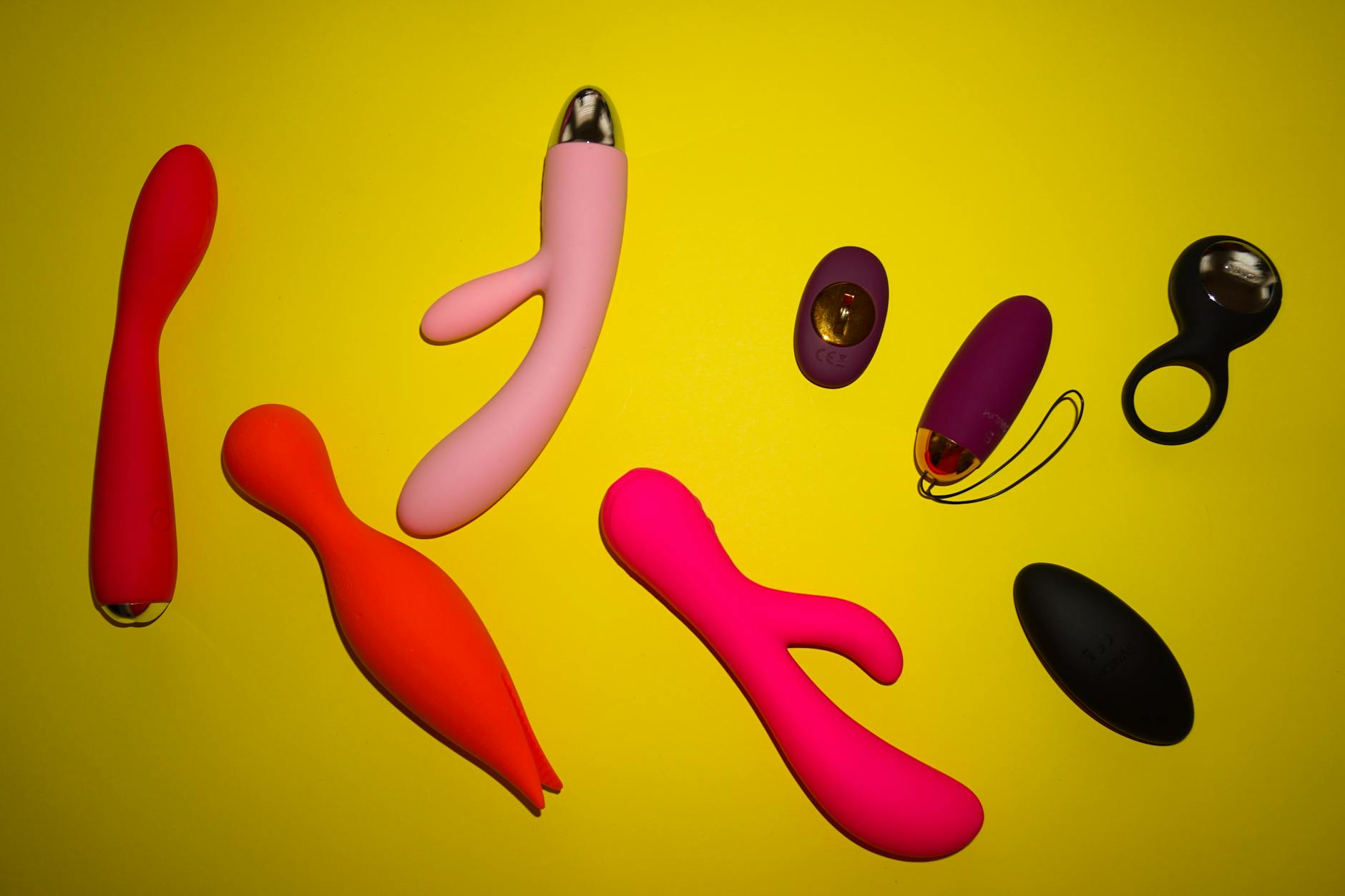
Anxiety doesn't just make you worry. It shuts you down. Your nervous system goes into protection mode, and one of the first things that gets sacrificed is sensation. You can touch yourself and feel almost nothing. Your partner can be right there, and you're somewhere else entirely, watching from the outside. That disconnection is real, and it's not a sign that something is broken in you.
What's actually happening is your brain has decided it's safer to dull incoming signals than to process them fully. It's a survival mechanism. When your body is flooded with cortisol and adrenaline, pleasure circuits get deprioritized. Your nervous system is too busy scanning for threats to care about subtle feeling.
Here's the thing though: lemon vibrators work differently than other tools because they bypass some of the complexity. Air-suction stimulation creates a sensation pattern that's hard for anxiety to ignore. It's direct, specific, and almost impossible to dissociate from. That's not coincidence. It's physics meeting neurology.
When you're in a state of chronic worry or hypervigilance, your nervous system is operating from the sympathetic branch. That's the accelerator. Everything is in go-mode or freeze-mode. Neither of those is conducive to pleasure.
Your brain needs to downshift to the parasympathetic branch to feel anything deeply. That's the rest-and-digest mode. Anxiety keeps you stuck in sympathetic overdrive, so subtle sensations just don't register. Even if you're trying to focus on your body, your mind keeps pulling back to whatever it's anxious about.
The other layer is dissociation, which often travels with anxiety. You might be physically present but mentally absent. Touch feels muted. Orgasms feel distant or don't happen at all. You go through the motions but there's a pane of glass between you and the experience.
Air-suction stimulation, like what the Lem provides, works by creating rhythmic pressure patterns that are intense enough to override the dampening effect of anxiety. It's not subtle, which is actually the advantage here.
When you use a lemon clitoral vibrator, the sensation is concentrated and specific. Your nervous system can't ignore it the way it ignores softer touch. That intensity requirement pulls your attention back into your body. Even if your mind wants to wander into anxiety territory, the sensation is loud enough to keep you grounded.
The suction pattern also mimics natural arousal responses, which can help restart the parasympathetic cascade. Your body recognizes the pattern and begins to downshift out of sympathetic overdrive, even when your conscious mind is still a bit stuck in worry.
Using a lemon vibrator when you're anxious requires more prep than when you're in a calm state. Your nervous system needs permission to relax.
Start with your environment. The space matters more than you'd think. Close the door. Put your phone in another room or at least face-down and out of sight. Dim the lights or light a candle. You're not creating ambiance for romance. You're creating conditions where your nervous system can feel safe enough to shift gears.
Set a time boundary. Anxiety loves open-ended situations. Tell yourself you have 20 minutes. Not an hour, not "until something happens." A specific window helps your brain relax because there's a clear endpoint. You're not committing to an undefined performance.
Use grounding first. Before you reach for the toy, spend 2-3 minutes doing something that anchors you to your body. Feel your feet on the ground. Press your hands into a pillow. Notice the temperature of the room. The goal is to move a tiny bit of your awareness back into your body before you add stimulation.
Start low. Most people assume they should jump to higher intensity settings, but when you're numb from anxiety, you need time for your nervous system to wake up. Begin at setting 1 or 2 on your lemon vibrator and stay there for 3-5 minutes.
You're not trying to orgasm right now. You're trying to feel. That distinction is critical. The goal in these first minutes is to notice any sensation at all, even if it's subtle. Your nervous system needs to recognize that this particular input is safe and worth paying attention to.
During this phase, check in with your breathing. If you notice you're holding your breath or breathing shallowly, slow it down deliberately. Breath is the fastest way to shift your nervous system state. Longer exhales activate the parasympathetic response. Breathe in for a count of 4, out for a count of 6.
After 3-5 minutes, if the sensation is starting to register, you can increase the intensity gradually. Move to setting 3. Spend another few minutes here. You're giving your nervous system time to process each level before you add more intensity.
Anxiety loves distraction. Your brain will try to pull you back into worry about work, relationships, your body, whether you're doing this right. That's not failure. That's just anxiety being anxiety.
When you notice your mind drifting, you don't need to fight it. Just notice it and bring your attention back to the sensation. You're not achieving a transcendent state. You're practicing the micro-skill of staying present. Each time you notice you've drifted and return to sensation, you're rewiring how your nervous system responds to stimulation.
Some people find it helps to have one simple anchor phrase. "I'm here now." "This feels good." Something grounded and present-tense. Not something that requires a lot of mental energy.
If you're using lemon vibrators to work through anxiety-related numbness, consistency helps more than intensity. Using your clitoral vibrator 2-3 times a week for 15-20 minutes is more effective than sporadic longer sessions.
Regular practice helps recalibrate your nervous system's baseline. Your brain starts to recognize that this particular activity is genuinely safe, and it begins to relax its guard. Pleasure sensation starts returning incrementally. You might notice it first as warmth, then as more localized feeling, then eventually as deeper arousal.
The progression usually looks like this: first you feel something, then you feel more, then you start to anticipate feeling more, and that anticipation itself becomes a form of arousal. Your nervous system is slowly re-learning the pleasure pathway.
It will sometimes. You'll be present and feeling good, and then suddenly a worry thought hits or your body tenses. That's normal, especially early on. You're retraining neural pathways that have been stuck in protection mode.
If this happens, pause for 10-15 seconds. Don't turn off the toy immediately unless you need to. Just pause the intensity or hold it without clicking through settings. Take 3-4 deeper breaths. Then you can resume or power down completely. There's no rule that says you have to push through.
Many people find that if anxiety interrupts the session, they can often restart after a few moments. But sometimes the nervous system just says no today, and that's information worth respecting. Tomorrow will work better.
Lemon vibrators work best when they're part of a broader anxiety management approach. They're not a replacement for therapy, medication, or other tools that are helping you. They're an addition to the toolkit.
If you're already working with a therapist on anxiety, lemon clitoral vibrators can actually support that work by helping you practice parasympathetic activation in a concrete, embodied way. You're literally training your nervous system to downshift, which is what therapy and other treatments are trying to help you do.
Many of my clients find that combining regular lemon vibrator use with grounding practices like walking, cold water on the face, or progressive muscle relaxation creates a cumulative effect. Your nervous system gets better at shifting out of anxiety mode, and that benefits not just your pleasure but your overall wellbeing.
If you have a partner, they don't need to be physically present during this work, but they do need to understand what you're doing. Anxiety-related numbness often shows up as lower desire or less responsive orgasms, and partners sometimes interpret that as rejection or lack of attraction.
The clearest thing you can do is explain what's actually happening: "When I'm anxious, I disconnect from sensation. I'm using my lemon vibrator to help retrain my nervous system. This is about me reconnecting with my body, not about you." That distinction prevents a lot of unnecessary hurt.
Some partners find it helpful to know roughly when you're doing this work, just as a heads-up so they're not confused by decreased sexual initiation or shifts in responsiveness. But the actual sessions should be private time for you.
Once your nervous system has relearned the pathway and sensation is returning, partnered intimacy often shifts too. You're more present because you're less numb. That's when things typically open up again.
You won't wake up after one session completely un-numb. This is re-education, not magic. Most people notice the first subtle shifts in sensation within 2-3 weeks of consistent use. By 6-8 weeks, the changes are usually more obvious. You feel more during everyday life, not just during intentional practice.
If you're also addressing the underlying anxiety through therapy, medication, or lifestyle changes, the timeline accelerates. The lemon vibrator is most effective when it's part of a multi-pronged approach.
Honestly, the timeline also depends on how long the anxiety has been keeping you numb. If this is recent, recovery is usually faster. If you've been disconnected for years, it takes longer. But the direction is almost always forward if you stay consistent.
Dissociation is a step beyond numbness. You're not just unable to feel. You're absent from your body. Lemon clitoral vibrators can help, but they work best paired with grounding techniques. The intensity of air-suction stimulation is difficult to ignore, which can pull you back into your body. But if dissociation is severe or frequent, check in with a therapist about it. This is usually a nervous system protective mechanism that might benefit from professional support alongside pleasure practices.
Likely yes, to some degree. Anxiety isn't linear. Stressful periods will probably create at least some re-numbing. But once your nervous system has learned the pathway back to sensation, the return is usually faster. You're not starting from zero again. You've already proven to your body that this feeling is possible.
Start low and increase gradually. There's no universal "best" because it depends on your individual nervous system sensitivity. Some people need more intensity to override the anxiety dampening. Others find that mid-range settings work better for building the parasympathetic shift. Pay attention to what helps you actually feel rather than what sounds intense. The goal is sensation, not performance.
When you're not anxious, your nervous system is already in a better place to receive pleasure. You can probably use your clitoral vibrator without as much prep work. When anxiety is present, the nervous system needs more support to downshift. That's why the environment, timing, and grounding matter more. You're working with your nervous system instead of against it.
Some anxiety medications can blunt sensation as a side effect. That's separate from the anxiety-numbing effect. If you think your medication is contributing, talk to your prescriber about it. Don't stop on your own. But lemon vibrators can still help rewire your nervous system response even if medication is also involved. They just might take a bit longer to show results.
Daily use is fine if it feels good, but it's not necessary. 2-3 times weekly with intentional, grounded practice is usually more effective than daily rushed sessions. Quality beats frequency. Your nervous system learns better from consistent, present practice than from routine that feels obligatory. If daily feels good and sustainable, go for it. If it starts feeling like a chore, scale back to 3-4 times weekly.
Anxiety-related numbness isn't a character flaw or a permanent state. Your nervous system is doing exactly what it's designed to do: protecting you. The fact that the protection includes numbing sensation is just a side effect of that same protective mechanism.
Lemon vibrators work because they speak directly to your nervous system in a language it understands. Specific, undeniable sensation that's hard to ignore. Your body can gradually learn that pleasure is safe again. It takes consistency and patience, but the pathway back is always there.
If you want to explore this further or talk through what's happening with your sensation, the team at Hello Nancy is here to help. Reach out to us with any questions about using lemon sexual toys for your specific situation.
Polyvagal Theory and the science of parasympathetic activation: Porges, S. W. (2011). The Polyvagal Theory: Neurophysiological foundations of emotions, attachment, communication, and self-regulation. New York: W.W. Norton.
Anxiety and dissociation in the nervous system: van der Kolk, B. (2014). The Body Keeps the Score: Brain, Mind, and Body in the Healing of Trauma. New York: Viking.
Sensory processing in anxiety and stress: Paulus, M. P., & Stein, M. B. (2010). Interoception in anxiety and depression. Brain Structure and Function, 214(5-6), 451-463.
Roleof breath in parasympathetic activation: Laborde, S., Moseley, E., & Thayer, J. F. (2017). Heart rate variability and cardiac vagal tone in psychophysiological research. Frontiers in Psychology, 8, 360.