One of you finishes in five minutes. The other needs twenty. You're not mismatched in desire, and nothing's broken. You're just operating on different timelines, and pretending that doesn't matter corrodes the whole experience.
Orgasm timing isn't about how much someone wants you. It's about nervous system response, anatomy, medication, stress levels, and sometimes just how their body is wired on that particular day.
One partner might need clitoral stimulation to reach orgasm. The other might come easily during penetration. One might be touch-sensitive after orgasm. The other might need five more minutes of everything. These are features, not bugs.
Here's what I see in my practice: couples who accept the timing gap and work with it report deeper satisfaction and way less resentment. Couples who see it as a problem to eliminate usually end up frustrated regardless.
Instead of treating both orgasms as the endpoint, treat them as separate events in the same session. This is not fancy. It's logistics.
Let's say partner A (let's call them Sam) comes quickly during penetration. Partner B (let's call them Jordan) needs clitoral focus to finish and often takes longer. The old script: Sam comes, then tries to help Jordan finish, but feels done and goes soft or disconnected.
The new script: Build more foreplay so Jordan is already aroused when penetration starts. During penetration, Sam can use a lemon clitoral vibrator on Jordan at the same time. This does three things at once: Sam stays engaged because they're doing something active. Jordan gets the direct clitoral stimulation they need. And both orgasms can actually happen close together, or in a way that feels connected rather than separate.
Most vibrators buzz. They work fine solo. But during partnered sex, they get in the way. The angles are wrong. The power is overwhelming when it's combined with another sensation. And if you're trying to use one while also being intimate, you're juggling too many things.
Lemon clitoral vibrators use suction instead of vibration. This means they work differently. The sensation is more concentrated, the stimulation is gentler, and because they're smaller and designed with partnered use in mind, you can actually use one during penetration without it feeling like you've brought medical equipment into bed.
From a practical standpoint: a lem vibrator is quiet, feels integrated rather than intrusive, and the suction sensation typically requires less "work" from the stimulated partner's nervous system. They're not as easy to desensitize to, which matters when you're trying to extend pleasure rather than rush toward the finish line.
Pattern 1: The booster. If the faster partner finishes during penetration, keep going. Have them use a lemon vibrator on their partner while staying inside. Most people can stay engaged during this because they're actively touching their partner rather than just waiting. The slower partner gets exactly what they need, and it usually feels collaborative rather than like someone's doing cleanup work.
Pattern 2: The opener. If the slower partner needs significant warm-up, both of you start with the vibrator before any other contact. Spend ten minutes just with that. By the time you move to penetration, both nervous systems are already elevated. Finish times get closer because they're not starting from such different places.
Pattern 3: The simultaneous approach. The slower partner uses the lemon vibrator on themselves while their partner is inside them or stimulating them manually. This sounds like a smaller role for the faster partner, but it actually requires more presence. They're watching, they're moving in rhythm with what's happening, they're reading when their partner is close. It's collaborative in a different way.
None of this works without talking about it when you're not about to have sex. Bring it up at breakfast or on a walk. Not in bed, not in the moment.
The script I recommend: "I've noticed we finish at pretty different times. I don't think that's a problem. I think we could actually make it better by using a toy together. I found something that might work. Can we talk about it?"
Then listen. Some partners worry it means they're not enough. Some worry about logistics or comfort. Some will immediately think it sounds great. Your job is to hear the actual concern, not the surface words.
Common worries and actual answers:
"Will it make you feel like I'm not doing enough?" No. It means you get to stay involved instead of checking out.
"Isn't that weird?" Less weird than faking it or feeling disconnected afterward.
"Will it desensitize me?" Lemon vibrators actually tend to extend pleasure rather than numb it because the sensation is different from manual touch.
Timing mismatch gets worse when either partner is stressed, rushing, or already disconnected. If you're using a lemon vibrator as a band-aid over a relationship that's in trouble, it won't fix the underlying issue.
Before you even get the toy: make sure you have time. Not stolen time. Actual time where neither of you is watching the clock. Most couples who report pleasure gaps are also rushing through sex because their lives are chaotic. Fixing the schedule often fixes more than the technique.
Then: talk about what the slower partner actually needs. Not what they think they should want. If they need clitoral stimulation, say that clearly. If they need the faster partner to slow down, say that. If they need a different mental state or a specific type of touch first, that's the actual baseline.
Then get the tool. A lemon clitoral vibrator is designed for exactly this. It's quiet, it's small enough to use during other activities, and the sensation is distinct enough that it doesn't feel like a replacement for touch. It feels like an addition to it.
Most couples I work with who adopt this pattern report the same three shifts: less resentment, more presence, and actually better orgasms because both people aren't anxious about timing anymore.
When the faster partner knows they can stay engaged (by holding the vibrator, by maintaining rhythm, by watching their partner), they don't get that antsy, disconnected feeling that comes from waiting.
When the slower partner knows help is coming and it's intentional, not like a favor, they relax more. Relaxation actually shortens the time needed.
Both of you get to finish from a place of connection rather than one person crossing the finish line while the other is still running.
Yes. In fact, this is one of the most common uses. Have your partner use it on themselves while you're inside them or engaged with them manually. This does two things: it extends the overall experience so you both finish closer together, and it keeps you from feeling like you have to either rush your partner or sit around feeling like you've done something wrong. You're actively participating in their pleasure.
Not with a lemon vibrator. These tools work through sensation diversity, not numbing. Because the suction feeling is so different from manual touch, it actually sensitizes most people rather than desensitizing them. They learn what they like and become more responsive overall, not less.
Frame it as problem-solving together, not as "you're the problem." The script is "I want us to both feel good. I've been thinking about how we could make that easier." It's a gift, not a correction. And genuinely mean it. If you're bringing it up to shame your partner for finishing fast or slow, they'll feel that and it'll backfire.
Yes, actually. Longer foreplay, focus on breath work, the slower partner taking a more active role (less lying back and waiting), different positions, and mental tricks like thinking about something totally unsexy for a few seconds. But here's the thing: if these have already not worked, a tool often does because it shifts the dynamic from trying harder to trying differently.
Then the timing gap probably isn't the real issue. Sometimes couples blame timing when the actual problem is low desire, resentment about something else, or a mismatch in how much either person wants sex. If the tool doesn't help, a conversation with a therapist who specializes in couples might be the next step.
Maybe. Start on the lowest setting, keep the session short, and pay attention to how your partner feels. Some people with sensory sensitivities actually do better with suction than vibration because the sensation is more localized and predictable. But everyone's different, so begin gently and adjust based on what you actually feel, not what you think you should feel.
Honest answer: you're never both going to come at exactly the same moment unless that's coincidence. And that's fine. The goal isn't synchronization. The goal is both of you finishing from a place of feeling connected and taken care of.
When you stop treating a timing gap like a failure and start treating it like a logistics question, everything shifts. You're on the same team solving the same problem, not on opposite sides of an impossible expectation.

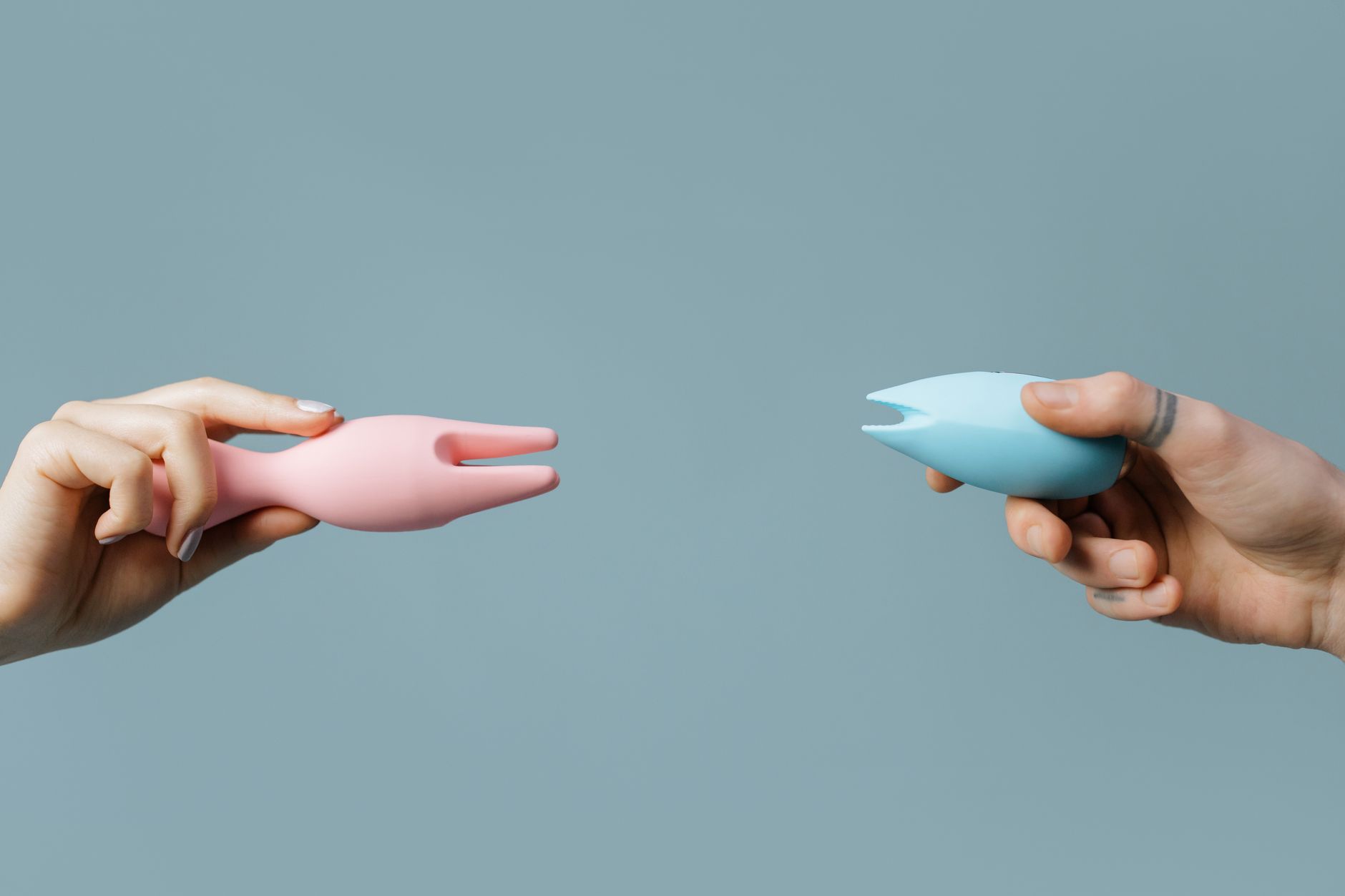 Photo by