How to Use Lemon Vibrators When Antidepressants Decrease Arousal
Let's be real. SSRIs save lives. They pull you out of the dark. They give you back your mornings, your energy, your will to show up.
Science
SSRIs and SNRIs work brilliantly for your brain. They can flatten desire and delay orgasm. Here's exactly how lemon clitoral vibrators help you reclaim sensation without stopping your medication.
Let's be real. SSRIs save lives. They pull you out of the dark. They give you back your mornings, your energy, your will to show up.
And sometimes they switch off your libido like someone flipped a master breaker.
This is not a side effect you imagined. It's not in your head (ironically, it kind of is, but not in the way you think). Selective serotonin reuptake inhibitors work by increasing serotonin availability in your brain. That same mechanism that lifts depression also dampens the dopamine and norepinephrine pathways that fuel sexual desire and physical response. Studies show 40-60% of people on SSRIs experience some degree of sexual dysfunction. You're not broken. Your brain chemistry changed. And there are concrete ways to work with that.
The culprit is serotonin's role in sexual response. Think of your nervous system like an orchestra. Dopamine and norepinephrine are the violins and brass. Serotonin is the conductor trying to keep everything calm and regulated. When you're depressed, the conductor is asleep. SSRIs wake the conductor up. But a conductor who's too attentive can slow the whole show down.
What happens in the body during sexual response is a cascade from parasympathetic activation (rest and digest, which is good for arousal) through sympathetic activation (fight or flight, which triggers orgasm). Serotonin is the hand on the brakes. More serotonin means the parasympathetic phase stays locked, and the transition to sympathetic activation takes longer or doesn't arrive at all.
So desire drops. Arousal takes forever. Orgasm becomes optional at best.
Here's what doesn't change: your capacity for pleasure is still there. Your clitoris still has all its nerve endings. Your brain still understands pleasure signals. What's changed is the volume knob on physical response. It's turned down. But you can turn it back up.
Most antidepressant-induced sexual dysfunction improves within 6-12 months as your body adjusts. Some people's brains adapt beautifully. Others don't. And "wait and see" isn't a strategy that works if you want to have an actual sex life in the meantime.
Lemon suction toys like the Lem are mechanically brilliant for this specific problem. Instead of relying on your body's natural lubrication and arousal response to build sensation, suction stimulation works differently. The rhythmic pulse creates stimulation that bypasses some of the neurological friction happening. It triggers your clitoris directly without requiring the whole chain reaction of arousal to fire first.
There's also a practical element. Many people on SSRIs report that sensation feels muted. Suction creates a novel stimulus that your nervous system registers strongly. It's not about overstimulation. It's about creating a clear enough signal that your dulled response system can actually read it.
Second, lemon vibrators give you permission to separate arousal from desire. You don't have to wait to "feel like it." You can use a clitoral vibrator because you want the physical experience of pleasure, not because you're horny. That distinction sounds small. It's massive for SSRI users.
Start with the right environment. You're working around neurological friction, so create physical ease wherever you can.
Timing matters. Take your SSRI at night if your doctor agrees. This gives you 8-12 hours for the peak concentration to settle into baseline before you want to use a lemon vibrator. If it's a morning dose, don't try this immediately after taking it. Wait a few hours.
Lubrication is not optional. SSRIs often reduce natural lubrication, and that reduced lubrication then signals to your brain that arousal isn't happening, which lowers desire further. Break that loop. Use a water-based lubricant generously. Not because you're broken. Because your medication changed your hydration response. Lem vibrators with lube feel completely different than without.
Build expectation, not pressure. Tell your partner (if you have one) what you're doing and why. "I'm using a clitoral vibrator because my brain chemistry needs a different kind of stimulation right now" is not a referendum on them or your relationship. It's you being strategic about your own pleasure while on medication that makes spontaneous arousal harder.
Start with the Lem on its lowest pattern. Suction stimulation is powerful. You're not training yourself to need more intensity. You're giving your system a clear signal to work with.
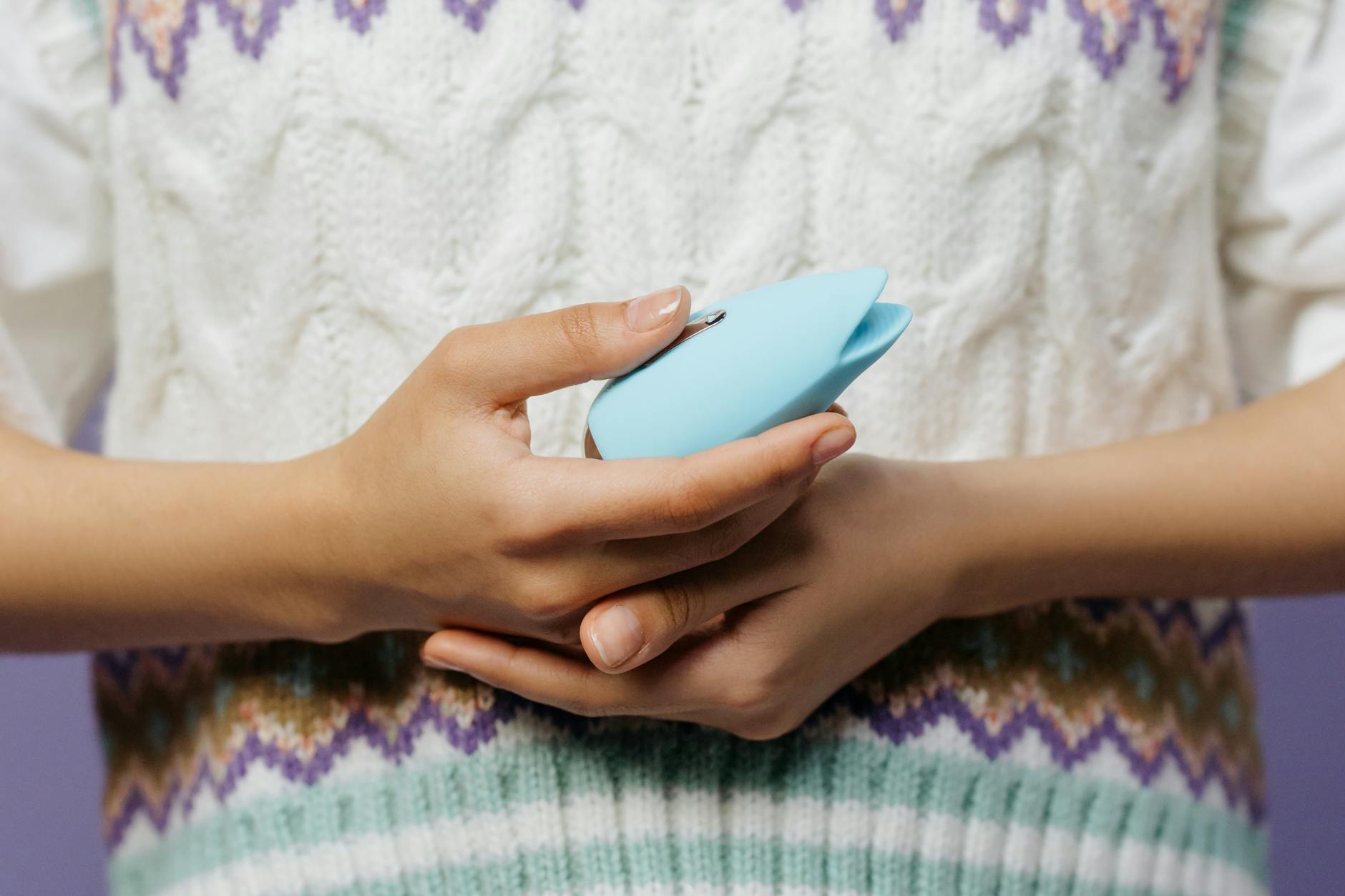
Photo by SHVETS production on Pexels
You're not trying to build arousal from nothing. You're amplifying whatever's there.
The sweet spot is 15-25 minutes into exploring your body without the toy. Touch yourself. Watch something that appeals to you. Imagine something that works. Let your body have a chance to register stimulation, even if it feels distant or faint. That's not a sign it won't work. That's the baseline your medication created.
When you switch to the lemon vibrator, you're introducing a stimulus that's strong enough to cut through the neurological noise. The suction pattern creates sensation your brain registers clearly, even when baseline arousal is low.
Most SSRI users report that orgasm happens faster once suction starts. Not because it's magic, but because you've removed the middleman of "waiting for natural arousal to build." The vibrator is doing the job that dopamine would normally do.
If you've given this three weeks and orgasm still isn't arriving, there's a medication conversation to have. Ask your doctor about:
Timing shift. Some SSRIs work better if you take them at different times. Taking your dose right after sex instead of before can help.
Dose adjustment. Sometimes a slightly lower dose maintains your mental health benefits without completely flattening sexual response. This is individual and requires a real conversation with your prescriber.
Medication switch. Bupropion (Wellbutrin) has less sexual side effects than SSRIs for many people. Mirtazapine can actually increase libido. There are options. You don't have to choose between your mental health and your sex life.
Augmentation. Some people add a medication like buspirone or take a "drug holiday" (waiting a few hours before sexual activity). These only work for some people, but they're worth discussing.
The key: this conversation is not you admitting defeat. Sexual response matters. Mental health matters. Both can be optimized.
Here's something nobody tells you. Using a lemon clitoral vibrator when your medication has dampened arousal often changes how you experience pleasure itself.
Without the build-up of natural arousal and the emotional intensity that comes with spontaneous desire, pleasure becomes more physical and less psychological. Some people hate this. It feels disconnected. Others find it liberating. You get to experience your body responding without the narrative. No anxiety about whether you're being sexy enough. No watching the clock. Just the pure sensation.
If you have a partner, this is worth naming. "My pleasure looks different on this medication" doesn't mean your pleasure is broken. It means you're accessing it through a different door. Some couples find that using a lemon vibrator together creates a different kind of intimacy. Less spontaneous passion. More intentional, collaborative exploration.
If sexual dysfunction on antidepressants is creating real relationship strain, a therapist trained in sex therapy or couples work can help. Particularly when using lemon vibrators with a partner where arousal timing is mismatched, having a third-party framework can shift how you both approach the situation.
If you're experiencing persistent anhedonia (inability to feel pleasure in anything, not just sex), that's a sign your medication or dose might need adjustment. That's different from SSRI-specific sexual side effects and deserves a conversation with your psychiatrist or GP.
And if you're considering stopping your antidepressant because of sexual side effects, talk to your prescriber first. Stopping SSRIs abruptly can trigger withdrawal symptoms. There's always a plan that keeps you supported mentally while addressing sexual response.
Mostly yes, with one caveat. Some combinations (like SSRIs plus certain other medications) can affect blood flow or sensation differently. The general rule: if you can safely have sex, you can safely use a lemon clitoral vibrator. But if you're on multiple psychiatric meds and sexual response has really tanked, that's worth mentioning to your prescriber. They can review your whole medication picture and see if there's optimization possible.
It varies. Some people adapt within 6-8 weeks. Others take 6-12 months. Some never fully adapt and need a medication conversation. There's no way to predict which camp you'll be in. Using a lemon vibrator while you wait gives you agency instead of passivity.
No, but I understand the worry. The mechanism isn't addiction. It's accommodation. Your nervous system recognizes that suction creates reliable stimulation, so it responds to it readily. If you stopped using the vibrator, you wouldn't be "stuck." You'd return to your baseline SSRI response (probably slow and effortful). But the vibrator isn't creating dependence any more than glasses create eye dependence. It's a tool that works with your current physiology.
If you're working with a sex-positive prescriber or therapist, yes. It's useful information. They might say, "Great, let's also talk about dose timing" or "This confirms we should explore a medication switch." If your doctor has been dismissive of sexual side effects before, you don't owe them a play-by-play of your masturbation. But if they ask about strategies you're using, the lemon vibrator is a legitimate part of your toolkit.
This is worth saying explicitly: "Antidepressants changed how my body responds. Using this helps me access pleasure again. It's not about you or about preferring a toy. It's about working with my medication's real effects." Many partners find that once they understand the mechanism, they actually want to help. Some couples use a lemon vibrator together as part of their sexual routine. Others keep it solo. Both are fine. The conversation is what matters.
Absolutely. Some people find that manual stimulation plus clitoral vibrator works beautifully. Others prefer to use the vibrator solo and then transition to partner sex. There's no rule. What works is what creates pleasure for you, and that's contextual.
Antidepressants are tools that keep your mind stable. Lemon clitoral vibrators are tools that help you access pleasure when medication has changed your baseline response. Using one doesn't negate the other. You can take your SSRI to stabilize your mood and use a suction toy to reclaim your sex life. Both are you taking care of yourself. Both matter.
If you're navigating this right now, start with patience for your body and clarity with your prescriber. Your pleasure deserves the same attention you give to your mental health.
Have more questions about rebuilding pleasure on antidepressants? Reach out. We're here to help.