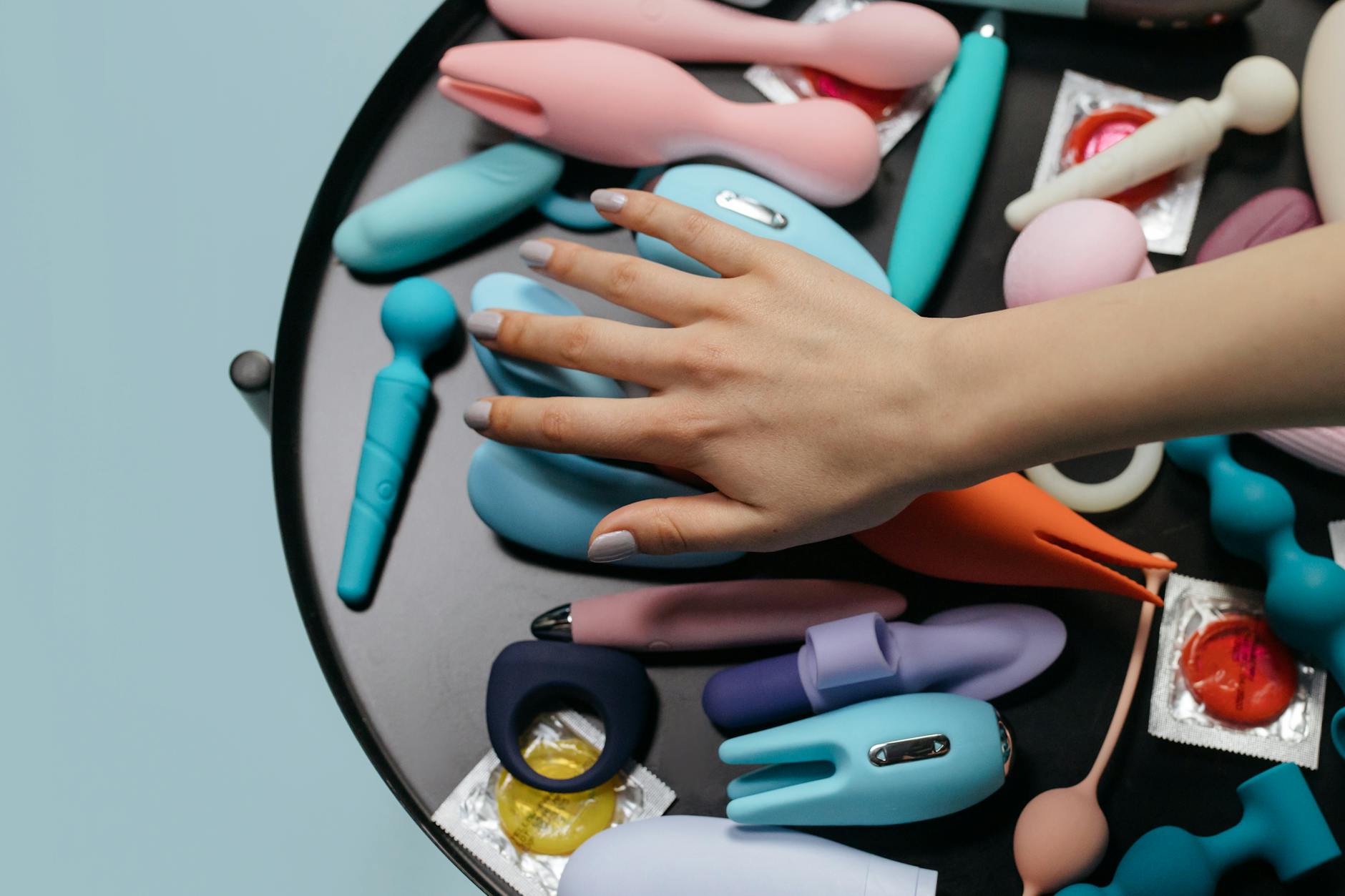
When your hormones change, your pleasure doesn't vanish. It gets muffled. The signals are still there, but the volume turns down. Whether you stopped hormonal birth control, entered perimenopause, dealt with thyroid issues, or went through any other hormonal transition, you've probably noticed that sensation isn't what it used to be. Maybe you need more direct stimulation to feel anything at all. Maybe orgasms feel distant or require intense focus. Maybe arousal takes longer to build.
Hormones don't just control fertility. They regulate blood flow to the clitoris, thickness of genital tissue, natural lubrication, and how quickly your nervous system responds to touch. When estrogen and testosterone levels shift, all of that changes at once.
Here's what I see clinically: after stopping hormonal birth control, many people report feeling "numb" during sex. That's not psychological. It's measurable. Birth control suppresses testosterone, which means less blood flow to the clitoris and reduced nerve sensitivity. When you stop it, your body needs time to recalibrate. That recalibration usually takes 3 to 6 months, sometimes longer.
Perimenopause and early menopause work differently. Estrogen drops more slowly, but it drops for years. That means progressive changes in tissue thickness, lubrication, and blood flow. The clitoral nerves don't disappear, but they're responding to less estrogen-fueled activity in the tissue around them.
The key insight: sensation loss after hormonal changes is not permanent. Your body is adjusting, not breaking.
When sensation is muffled, you need a tool that bypasses the problem. This is where air-suction and vibration devices shine. Instead of waiting for your tissue to respond naturally to touch, you're creating stimulation that the nervous system registers more reliably.
Lemon vibrators work particularly well because they deliver consistent, focused stimulation right where you need it most. Unlike manual touch, which can feel too light or inconsistent when sensation is dampened, vibration keeps delivering the same signal repeatedly. Your nervous system eventually wakes up and says, "Oh, okay, I recognize this." That recognition is how you rebuild sensitivity.
Think of it like this: if your pleasure response is asleep, vibration is the alarm clock. Air suction is a gentler version of the same thing.
The first step is commitment to exploration, not outcome. Most people make the mistake of using clitoral vibrators the same way they did before hormonal changes. That doesn't work because the baseline has shifted. You're basically starting over, and that requires patience.
Budget time differently. Before, maybe you warmed up in 5 minutes. Now budget 20 to 30 minutes, even if you feel nothing for the first 15. Sensation rebuilds gradually. Don't rush it.
Start with lower intensity. If your Lemon vibrator has multiple settings, begin on pattern 1 or 2, not your old favorite. Your tissue is literally different. Let it adjust to stimulation slowly. You can always increase intensity later. Many people find that starting too strong actually makes sensation feel duller, not sharper.
Use lubrication consistently. Hormonal changes often mean less natural lubrication. Water-based lube isn't a sign of failure. It's a tool that makes sensation more consistent by removing friction drag. Slickness actually helps your nervous system register stimulation better.
Here's a clinical technique that works: explore your clitoris like you've never seen it before. Use a hand mirror. Notice where it's most sensitive. Start using your vibrator on that exact spot, not around it. Many people with reduced sensation benefit from hyper-targeted stimulation rather than broader patterns.
Then, over weeks, gradually expand the pattern. Start at the tip of the clitoris. Move to the sides. Explore the hood. Use different patterns on different parts. This teaches your nervous system to wake up in zones, not all at once.
Don't do this during sex or partnered activity yet. This is solo reconnaissance. You're gathering data about what your body is actually capable of right now.
If you still menstruate, hormonal shifts happen throughout your cycle. Sensation often improves mid-cycle, when estrogen rises. Plan your exploration time around that window. You'll feel results faster, and your nervous system gets positive reinforcement. That positive reinforcement matters. It rewires your brain to expect pleasure again.
If you're past menstruation or have irregular cycles, consistency matters more. Use your vibrator at the same time of day, several times a week. That routine signals to your body that pleasure is a priority, which it is.
Some medications complicate hormonal sensitivity too. Antidepressants, thyroid meds, and blood pressure medications can all dampen sensation independently of hormonal changes. If you're on multiple medications that might affect arousal, talk to your prescriber about timing. Many SSRIs, for example, have less impact on sensation if you take them at night instead of morning.
If you're dealing with thyroid issues, get your levels checked. Hypothyroidism crushes arousal and sensation. Optimizing your thyroid dosage might do more for your pleasure recovery than any toy. That said, while you're optimizing hormone levels, lemon vibrators can still help you maintain neural pathways for pleasure.
Sensation recovery after hormonal changes takes time. Real recovery, not just mechanical stimulation. Your nervous system is rewiring. Your vascular system is recalibrating. Your brain is relearning to expect pleasure from your body.
Most people see real shifts after 8 to 12 weeks of consistent exploration. Not always faster. Sometimes longer. If you're expecting to feel like "you" again after one or two uses of a vibrator, you'll get frustrated and quit.
But if you commit to 3 to 4 uses a week for 12 weeks, rebuilding your sensitivity in stages, most people report significant improvement. Not just sensation, but arousal time, orgasm intensity, and most importantly, the sense that pleasure is available to them again.
Once you understand what your body responds to, you have something to share. Tell your partner: "I'm rebuilding sensation after this hormonal change. Here's what I've learned works. Let's use that." That conversation prevents resentment and creates shared ownership of pleasure recovery.
Your partner doesn't need to do anything special. They just need to understand that you're not avoiding them. You're recalibrating. There's a difference.
If after 12 weeks of consistent use you feel no change in sensation whatsoever, see a gynecologist or menopause specialist. Sometimes hormonal changes create actual tissue changes that need clinical intervention (like topical estrogen creams if you're menopausal). Sometimes an underlying condition is at play. That's not failure. That's information.
Also see a doctor if you feel pain during any of this. Pain is not part of sensation recovery. Pain is a sign something else is happening.
Most people report noticeable changes in sensation within 4 to 8 weeks of stopping hormonal birth control. Full recovery of baseline sensation often takes 3 to 6 months. But "normal" is tricky because your body might feel different than it did before you started birth control. That's not wrong. It's just different. Some people find that post-birth-control sensation is actually stronger than before.
Absolutely. Many people on birth control use vibrators successfully. The issue is specifically the difference you feel when stopping birth control. If you're currently on it and want to explore, vibrators are great tools. Just know that when you stop the medication, you might need to recalibrate.
No. Using a vibrator is not cheating your body's recovery process. You're actually supporting it. Stimulation promotes blood flow to the clitoris, which encourages the tissue remodeling your body is trying to do anyway. It's like physical therapy for your pleasure response.
Start low and consistent. Stick with a lower pattern for at least 2 to 3 weeks. Then gradually explore higher intensities. Changing intensity too frequently confuses the learning process. Once sensation rebuilds, you can experiment freely. During recovery, consistency is more important than variation.
First, make sure you're giving it enough time and frequency. Twice a week isn't enough. Aim for 3 to 4 times weekly. Second, make sure you're actually relaxed. If you're anxious or rushed, your nervous system won't engage. Set aside real time. Reduce distractions. Third, see a doctor to rule out underlying issues. Sometimes hormonal changes mask other conditions that need attention.
No. Sensation doesn't disappear. It changes. And it can be rebuilt with the right approach and tools. Even in severe hormonal fluctuations like menopause, the clitoral nerves remain intact. The experience changes, but pleasure is still possible.
Hormonal changes are a normal part of being human, but they're not a life sentence of muted sensation. You're not broken. You're adjusting. And with intention, patience, and the right tool, most people rebuild pleasure sensitivity that feels even richer than before.
If you want to explore this further or have questions specific to your situation, reach out. Sometimes talking through your individual hormonal history makes the recovery process faster.