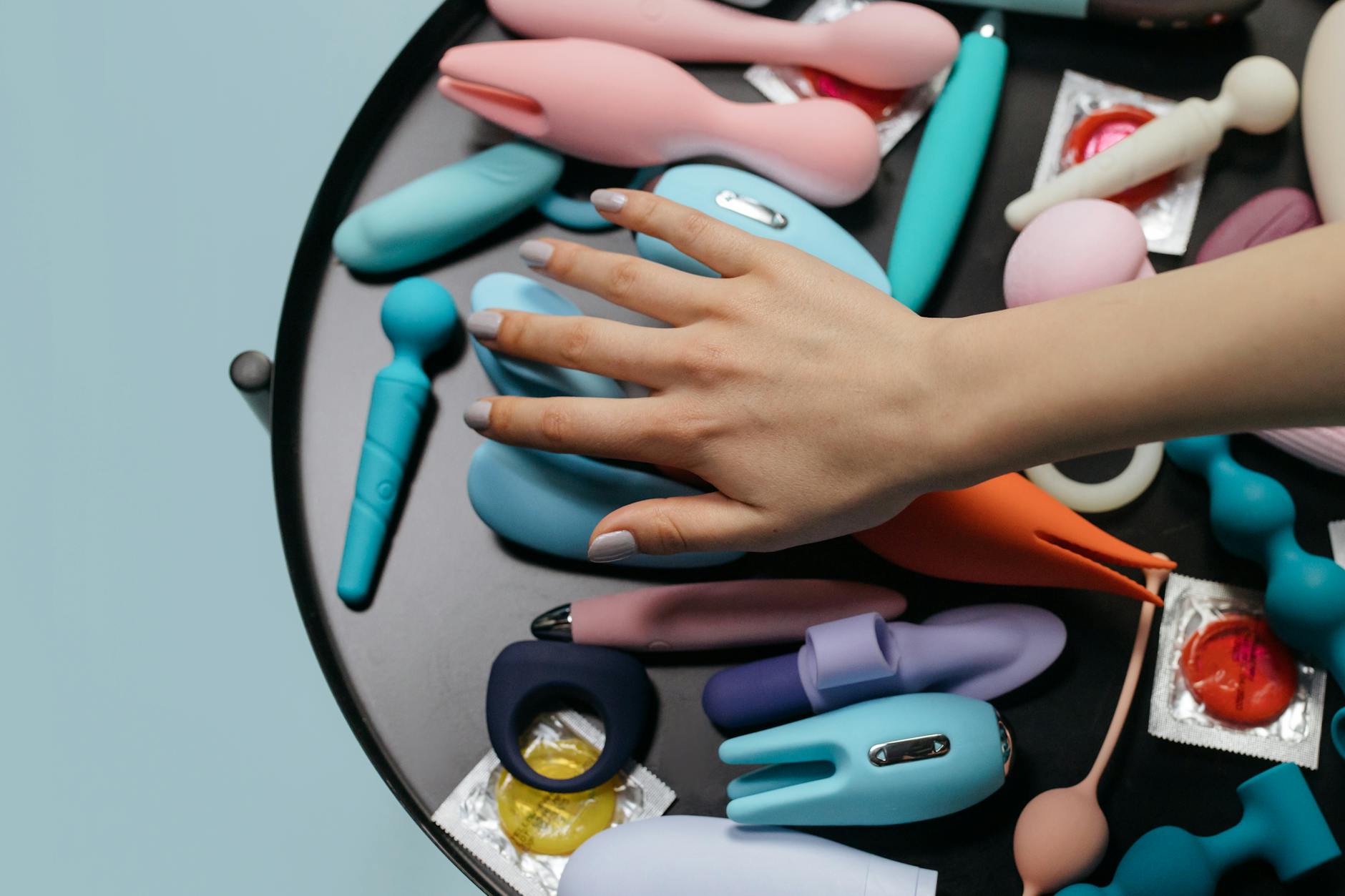
How to Use Lemon Vibrators When You Have Low Sex Drive After Stress or Burnout
When burnout flattens your libido, pleasure doesn't come back on its own. Here's how lemon clitoral vibrators can help you rebuild desire from the ground up.
Burnout doesn't just make you tired. It short-circuits the neurochemistry of desire. When you're running on fumes, your brain deprioritizes pleasure in favor of survival. That's not laziness. That's not a relationship problem. That's your nervous system protecting itself.
The issue is that once desire flatlines, most people think they need to wait for motivation to return naturally. It doesn't. Pleasure is a practice, and lemon vibrators are one of the most effective ways to restart that practice when stress has killed your libido entirely.
Chronic stress elevates cortisol, the hormone that basically tells your body "this is not the time for pleasure." Simultaneously, dopamine and testosterone drop. You're not imagining the flatness. Your brain chemistry has actually shifted. You could be partnered with the most attractive person on earth and still feel nothing. This is the neurobiology of burnout, not a character flaw.
The second layer is psychological. Burnout often brings shame about lost desire. You feel broken. You worry your partner feels rejected. That anxiety then makes arousal even harder. You end up in a cycle where the more you stress about low libido, the more entrenched it becomes.
Lemon vibrators break this cycle because they bypass the need for spontaneous desire. You don't have to feel like having sex to use one. You just have to be willing to spend 15 minutes with yourself.
When burnout has decimated your sex drive, the worst thing you can do is aim for a full, partnered experience. You'll fail, feel worse, and burrow deeper into the shame cycle.
Instead, start micro. Set aside 10 minutes. Not 20, not 30. Ten. This is about proving to your nervous system that pleasure is possible again, not about achieving orgasm. If you orgasm, great. If you don't, that's also fine.
Use a lemon vibrator on the lowest pattern. Spend the first 3 minutes just holding it against your inner thigh, not even on the clitoris. Notice sensation without expecting anything. Let your body remember that touch feels good. Many people rediscover pleasure through this low-pressure approach faster than they do through goal-oriented sex.
One of the biggest mistakes people make after burnout is trying to rebuild sex drive in the exact same environment where burnout happened. You can't. Your nervous system has learned that your bedroom, your bed, your usual time of day feels like an extension of work stress.
Change the context. Not dramatically. Just differently. Use the lemon vibrator in the bathtub. Or on the couch on a weekend morning. Or even in a hotel room if you can. This rewires your brain to separate pleasure from the stressor.
Second, give yourself permission to use the lemon vibrator for pure exploration rather than performance. Watch how each pattern feels. Notice which intensity level doesn't feel like overstimulation. Use it with lube even if you think you don't need it. Burnout often makes tissues feel less responsive; lube adds sensation without friction. This is not a workaround. This is recalibration.
Lemon clitoral vibrators, particularly the suction-style design, work on a neurological principle that's distinct from traditional vibration. They stimulate without requiring the cognitive bandwidth of partnered sex. You don't have to perform. You don't have to worry about your partner's pleasure. You don't have to maintain arousal through anticipation. You just receive sensation.
For people in burnout, this is crucial. Burnout erodes your ability to hold attention on pleasure for long. The moment your mind wanders to your to-do list or a work email, you crash. Suction-style lemon vibrators are harder to "lose" because the sensation is novel and focused. Your brain can't multitask around it the way it can with a standard vibrator.
If you have a partner, this actually helps your relationship. Using a lemon vibrator solo while your partner is present or aware (without pressure to perform) can rebuild desire in the relationship too. You're literally rewiring your nervous system to recognize pleasure as safe. That circulates back to partnered contexts naturally.
Don't try to rebuild sex drive during the worst of burnout. If you're in active crisis at work, or you've just exited a brutal period and are in early recovery, your nervous system is still in high alert. Wait two to three weeks until your cortisol has started to normalize.
Once you're in the recovery phase, consistency matters more than intensity. Use the lemon vibrator two to three times per week, always at the same time of day if possible. This trains your nervous system to expect pleasure as a regular input, not a luxury. Your dopamine pathways start to anticipate it.
Burnout recovery is slow. Don't expect desire to roar back. Expect it to whisper back. Expect 10 minutes of genuine interest on a Tuesday afternoon to feel like a victory. It is.
The lemon clitoral vibrator works best when paired with one additional element: basic nervous system down-regulation. Before you use it, spend three to five minutes on something grounding. A cold glass of water. Five deep breaths. A short walk. Something that tells your parasympathetic nervous system "we're safe now."
This isn't mystical. It's physiology. Your body can't access pleasure while it's in a stress response. A simple reset practice primes your nervous system to actually receive the sensation from the vibrator rather than cycling through background anxiety.
After you use the lemon vibrator, rest for 5 minutes. Don't immediately jump back into your day. Let your body integrate the pleasure. This small pause tells your nervous system that pleasure is valuable and worth protecting.
Rebuilding desire after burnout isn't about forcing yourself to want sex. It's about proving to your body that pleasure is safe again.
If you're partnered, transparency helps. You don't need to explain your entire nervous system. You could say something like: "I'm using this time to rebuild some of what burnout took. It's not about us. It's about me remembering that pleasure is possible." Most partners feel relieved by this honesty rather than hurt by it.
Some partners want to be involved. If yours does, you could explore together. But only if you genuinely want that. Burnout recovery requires fierce boundaries around what you will and won't do. Using a lemon vibrator solo is perfectly complete. Partnered integration is optional.
If burnout has tanked your libido, you've probably internalized shame about it. That you're broken. That your partner deserves better. That you'll never feel desire again. None of that is true, but the feeling is real.
Using a lemon vibrator is an act of self-care and also an act of defiance against that shame. You're telling your nervous system: "I believe you can heal. I believe pleasure is worth practicing." This is not trivial. This is the actual work.
It varies wildly. Some people feel a shift within two to three weeks of consistent gentle pleasure practice. Others need two to three months. The key is not to measure by external timelines. If you're noticing one extra moment of interest, that's progress. Burnout recovery is not linear. There will be setbacks. This is normal.
Yes, and in fact, it's one of the best practices. Antidepressants can flatten sensation, and a lemon clitoral vibrator's suction-style stimulation often bypasses that numbness. You're working with a stronger signal, which helps your brain register pleasure despite medication effects. If nothing is shifting after eight weeks of regular use, talk to your doctor about whether your dosage or prescription could be adjusted. But the vibrator itself won't interfere.
That's fine. Orgasm is not the goal during burnout recovery. Sensation is. The goal is to prove to your nervous system that pleasure exists and that it's safe. An orgasm during burnout recovery is a bonus, not a requirement. Many people find that once their nervous system relaxes, orgasm returns naturally. But it's not the metric.
Start alone. Full stop. You need to rebuild your own relationship with pleasure before introducing another person into it. Once you've spent three to four weeks using it solo and feeling comfortable, you can explore partnered contexts if you want. But solo is the foundation.
The opposite, actually. When you've rewired your nervous system to access pleasure through a lemon vibrator, that neurological pathway strengthens everywhere. Partnered sex often becomes easier because your brain remembers that pleasure is possible. You're not trying to create desire from zero. You're bringing a primed nervous system to the interaction.
Then the work becomes harm reduction rather than full recovery. You're not trying to cure burnout with a vibrator. You're protecting your pleasure capacity while you navigate the larger situation. Use the lemon vibrator as a weekly reset for your nervous system. It won't solve burnout, but it will help you stay connected to yourself while you figure out the bigger changes.
Burnout is brutal. It takes parts of you that feel essential. But desire is resilient. It comes back. It comes back faster and stronger when you practice it with intention, without shame, and with tools that work. A lemon clitoral vibrator isn't a cure for burnout. But it's one of the most direct paths back to pleasure when stress has stolen your ability to find it on your own.
If you want more support navigating stress, intimacy, and rebuilding what burnout took, reach out. We're here.