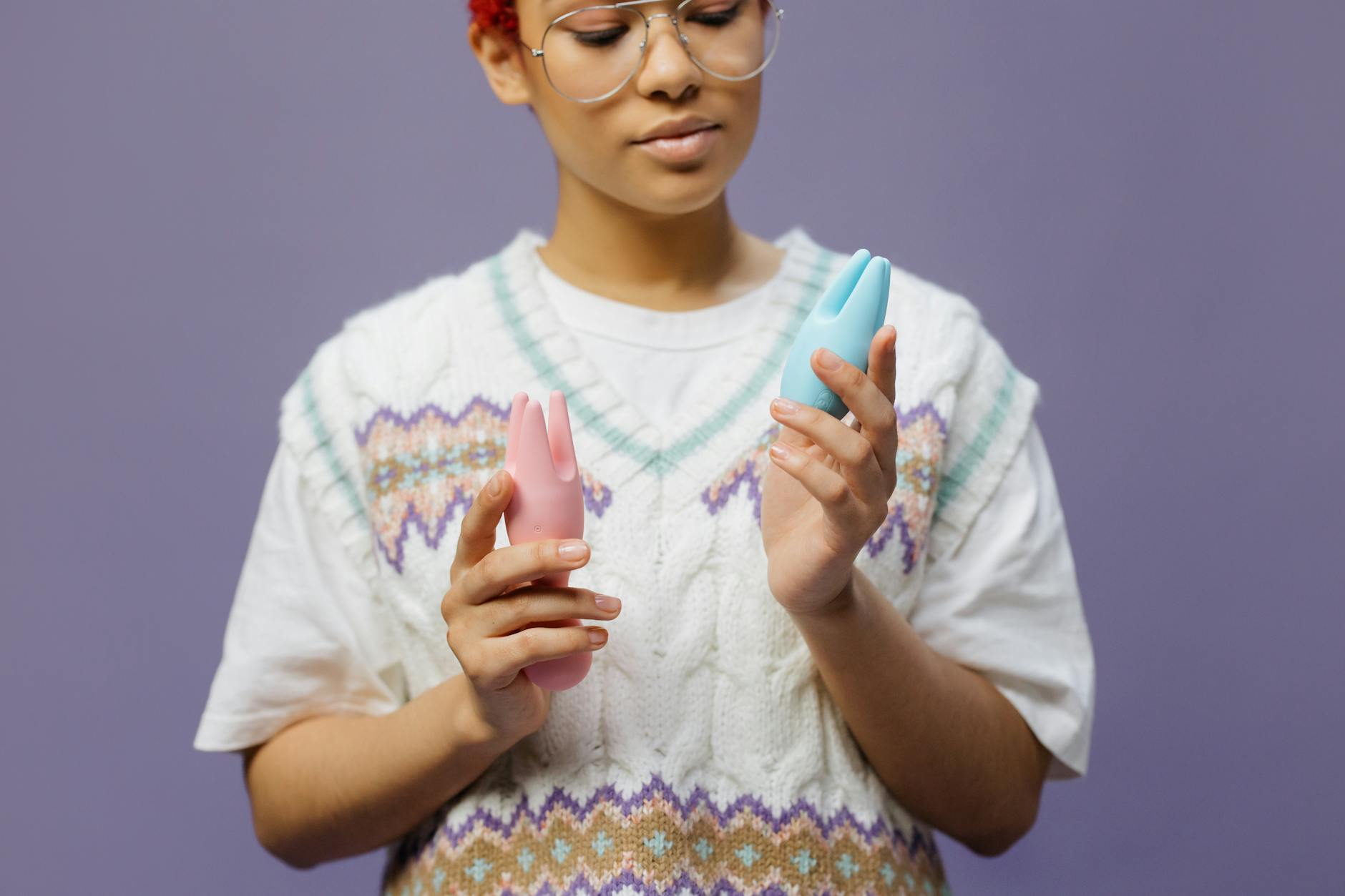
Sexual trauma changes how you relate to your body. It doesn't erase your capacity for pleasure, but it can put a wall between you and sensation. Some survivors feel numb. Others feel hypervigilant, scanning their body for threat instead of opening to sensation. Both are completely normal responses to what happened.
Reclaiming pleasure after trauma isn't about "getting back" to where you were. It's about building something new. Something that feels safe now. And that process, weirdly, often involves the very tools that might have felt impossible before.
Lemon vibrators can be part of that rebuilding. But only if you use them in a way that honors what you've been through. That's what we're covering here.
After trauma, the single most important element isn't intensity or technique. It's control. Your control.
When you've had your autonomy taken, reclaiming it through pleasure becomes an act of resistance and healing. Lemon clitoral vibrators work well here specifically because you are holding it, you are setting the intensity, you are deciding when to touch and when to stop. There's no performance, no external pressure.
Start with this mindset: you're not trying to achieve an orgasm. You're practicing sending your nervous system the signal that it's safe to feel. That's the whole goal. Orgasm might come, or it might not. Both are wins.
Trauma lives in the body. When you touch yourself, your nervous system might interpret sensation as a threat, even though intellectually you know you're safe. Grounding techniques interrupt that automatic alarm.
I recommend doing at least one of these before and during solo play:
Temperature contrast. Hold an ice cube in one hand while exploring with the lemon vibrator in the other. The cold sensation anchors you to right now, to the present moment, instead of letting your mind slip back. It also gives your nervous system something clear to pay attention to.
Bilateral stimulation. Play a song you love and tap your feet rhythmically while using the lemon vibrator. The cross-body rhythm (left foot, right foot) genuinely settles the nervous system. It's a somatic trick therapists use in trauma work.
Verbal grounding. Say your name out loud, the date, and something you can see around you. "I'm Sarah. It's April 12, 2026. I can see my bedroom, my safe space." This sounds simple but it genuinely anchors you to the present.
5-4-3-2-1 sensory scan. Before you touch yourself, name five things you can see, four you can touch, three you can hear, two you can smell, one you can taste. It's a reset button for the nervous system.
Choose one. Do it before you begin. Then you're ready.
The first time, don't use the lemon vibrator on your clitoris. That's counterintuitive, but necessary. Your body needs to relearn that sensation equals safety, and that lesson is easier to absorb in lower-stakes places first.
Start with the lemon vibrator (on the lowest setting) on your thighs, your inner arms, your collarbone. Neutral zones. Stay there for 5 to 10 minutes. This is just data gathering. What does the sensation feel like? Does your nervous system stay calm? Does it spike? There's no wrong answer. You're learning your body's language again.
Only when you feel genuinely curious (not pressured, curious) move toward your genitals. Outer labia first, then inner. If you're using one of The Lemon Suction Toys' lemon clitoral vibrators, the suction aspect is gentler than traditional vibration because it doesn't require direct friction. Start at pattern 1 or 2.
The goal here is sensation without performance. Can you feel it? Can you notice it without spiraling into "is this working?" or "should this feel better?" If yes, you've succeeded.
Flashbacks during pleasure are real and they're common. Sometimes a particular sensation, a sound, or even just the vulnerability of being naked and still triggers a memory of the trauma. It might feel like your nervous system is hijacked. You're suddenly back there, even though you're safe here.
Here's what helps:
Stop immediately. Not because you've failed. Because your body is telling you it needs something different right now.
Move your body. Get up, shake it out, do jumping jacks, splash cold water on your face. Movement tells your nervous system the threat has passed.
Name what happened. "I just remembered [specific moment]. That was then. I'm here now. It's [date], I'm safe." Sounds awkward, but it's neurologically useful.
Don't shame yourself. A flashback doesn't mean you're broken or not ready. Your nervous system is doing its job, which is protecting you. It's just being overprotective. That's what trauma does.
Flashbacks often become less frequent and less intense over time, especially if you're working with a trauma-informed therapist. But in the moment, none of this is a sign you should give up on reclaiming pleasure. It's a sign your nervous system needs a slower timeline.
Recovery isn't linear. Some weeks you'll feel ready for more. Other weeks you'll want to scale back. Both are normal and both deserve respect.
The pattern I see work best: every few weeks, if things feel good, add one small new element. Maybe it's a slightly higher intensity setting. Maybe it's extending your session by five minutes. Maybe it's trying it in a different room or at a different time of day. Tiny additions, not leaps.
Lemon vibrators are genuinely useful for this because they're intuitive. You're not fiddling with complicated controls while you're trying to stay present. You're holding something in your hand and deciding what you want from moment to moment.
There's a difference between discomfort that's part of healing (new sensation, vulnerability, nervousness) and actual pain or the feeling of being unsafe. Learn to feel that difference.
Discomfort that's healing-adjacent usually has a curious quality to it. It's unfamiliar but not frightening. You can breathe through it. You want to understand it.
Unsafe feelings have a different texture. Panic, dissociation, shame spirals, numbness that feels like separation from your body. If you hit those, stop. It's not weakness. It's information. Your body is telling you the pace is too fast.
If you're consistently hitting the unsafe feeling, work with a trauma-informed therapist before going further with solo play. There's no timeline for this. Healing is longer than people want to admit, and that's completely okay.
If you have a partner, lemon clitoral vibrators can also be a bridge back into shared pleasure. But the stakes are different. You now have to manage not just your own nervous system but also your partner's reactions and presence.
The conversation before matters enormously. "I'm rebuilding trust in my body with pleasure. I need to go slowly. I might need to stop mid-session. I need you to not take that personally." A partner who gets it will understand. A partner who can't hold space for that pace might not be the right person for this phase of your healing.
If you're exploring together, let the lemon vibrator be about your pleasure, not his. That removes performance pressure. He's there to support, not to participate in the same way. Different roles, different kinds of intimacy.
Completely. Numbness is a protective response. Your nervous system essentially turned down the volume on sensation to protect you from further pain. Rebuilding sensitivity takes time, sometimes months or years. The fact that you're showing up and trying is the win right now, not the sensation itself.
Stop using the vibrator, move your body, ground yourself with the 5-4-3-2-1 technique, and breathe slowly. Panic attacks peak and pass. They feel endless while they're happening but they genuinely do end. If panic attacks are frequent, mention it to your therapist or doctor. Some survivors benefit from medication to support nervous system regulation.
That depends on your relationship and your needs. If you're partners who share sexual space, transparency usually strengthens things. But you don't owe anyone access to your healing process if you're not ready. If you decide to share, frame it as "I'm taking care of myself" not "I need this because of something you did or didn't do."
Yes, and in fact many trauma-informed therapists support it. Solo pleasure is about agency, which is the antidote to trauma. Just mention it to your therapist so they can help you track whether it's helping or creating new patterns to untangle.
Your nervous system needs a slower timeline. Consider pausing solo play for a bit and focusing on grounding and somatic therapy. Some people benefit from starting with non-sexual touch first, like self-massage, before adding a vibrator. There's no rush. Healing happens at the pace it happens.
You'll feel a shift. Curiosity instead of obligation. The ability to say no without guilt. The desire to be touched by someone else. There's no metric. It's an internal knowing. And even when you're ready, pace matters. Go slower than you think you need to. Slower is always the right call.
Sexual trauma is real and it's not something to rush through or minimize. Reclaiming pleasure isn't about erasing what happened. It's about proving to yourself that your body can feel good things again, that sensation doesn't always mean harm, that you get to decide what happens next.
Lemon clitoral vibrators are a tool. They're not a cure. But they can be part of a larger process of rebuilding trust, agency, and pleasure on your own terms. The Lemon Suction Toys are designed with simplicity and control in mind, which matters when you're healing.
If you're just beginning this journey, consider also working with a trauma-informed therapist. The combination of somatic work, talk therapy, and exploring your own pleasure makes the deepest healing possible. You've already shown courage just by showing up. The rest unfolds from there.
For questions about using any of The Lemon Suction Toys products, reach out to our team at /contact. We're here to support your journey back to pleasure, whatever that looks like for you.