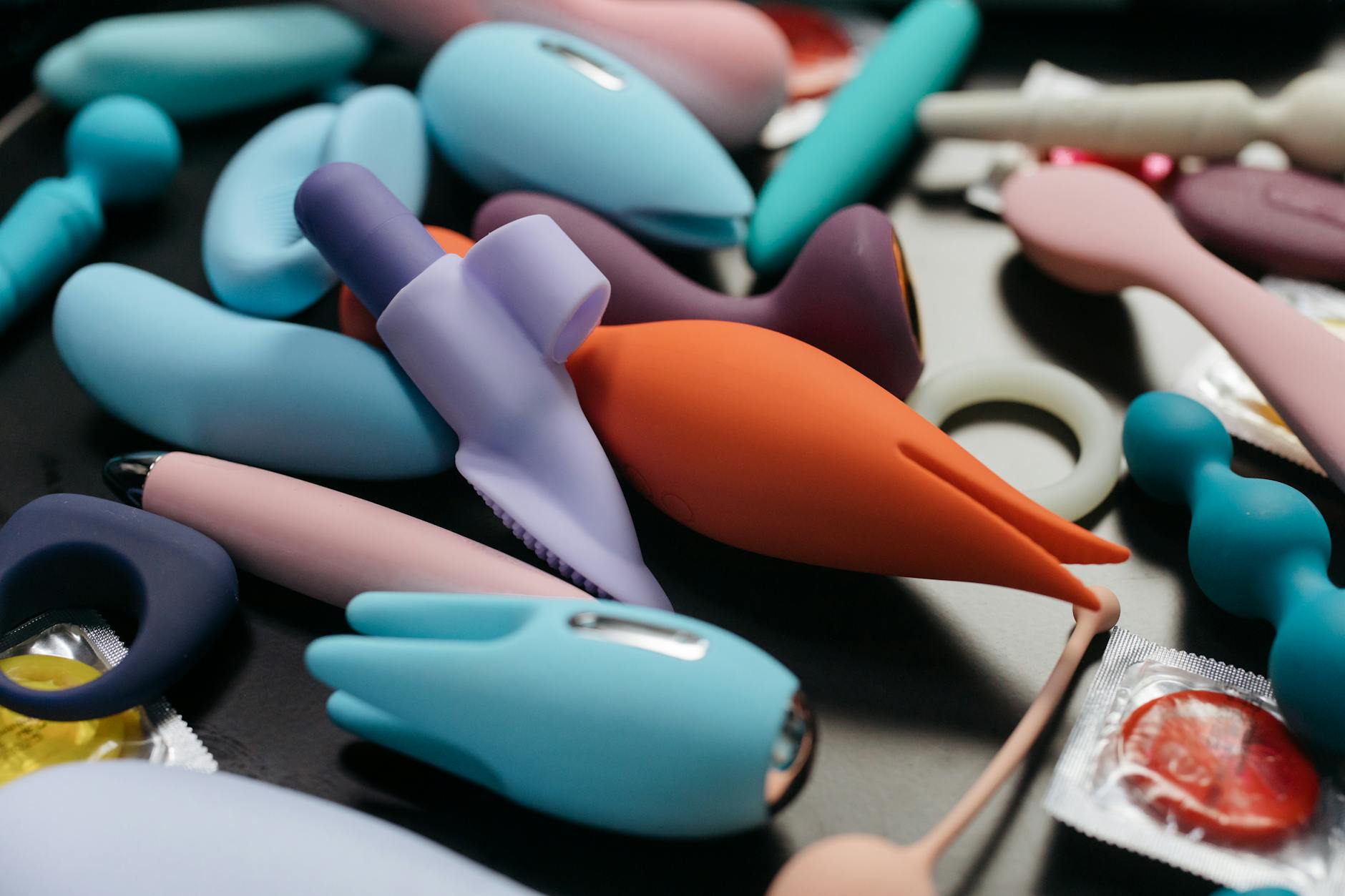
Vaginismus is your nervous system doing its job too well. The pelvic floor muscles tighten involuntarily, turning what should feel good into something that hurts. If that's you, you've probably already heard the usual advice: relax, use lube, go slower. But you already know that doesn't work, because the problem isn't friction or lubrication. It's tension.
The good news is that lemon clitoral vibrators bypass the entire problem. They work on the exterior, where there's no involuntary muscle gate, no pain response. For people with vaginismus or ongoing pelvic floor tension, they're often the first tool that actually feels accessible.
Your pelvic floor is a hammock of muscle that supports your bladder, uterus, and bowel. When you're stressed, traumatized, or anxious about penetration, those muscles can clench and refuse to relax. It's not a personality flaw or a sign something's "broken." It's a protective response. Your nervous system learned that penetration equals danger, so it locks the door.
The problem is that once the door locks, pleasure gets trapped outside too. Penetration becomes painful or impossible. Many people then avoid sex altogether, which feels safer but also feels like loss.
Lemon vibrators work because they don't require relaxation of the pelvic floor. You're working with the clitoris, which has a completely different nerve pathway and doesn't trigger the same protective response. You're also getting the benefit of the suction mechanism, which is gentler than direct vibration on sensitive or tender tissue.
A standard vibrator relies on speed and friction. The Lem works through gentle suction and pulsing. Here's why that matters when you have pelvic floor tension.
With traditional vibration, you're introducing friction into an already-tense situation. Your nervous system might interpret that as another threat, making you clench tighter. It's a spiral. With suction, you're creating a different sensation entirely. The stimulation is broader, less pointed, and the pulsing action feels more like a rhythm than an invasion. Your nervous system doesn't perceive it the same way.
Many people with vaginismus report that the suction feel of lemon vibrators actually helps them relax, rather than making them tense. That's not accidental. The mechanism itself is part of the healing.
If you're used to pain during sex, your body has learned to brace. That bracing habit doesn't disappear the moment you pick up a toy. You need to practice undoing it.
Begin with the Lem on the lowest setting, alone, with zero pressure to do anything else. You're not trying to have an orgasm. You're trying to learn what non-painful pleasure feels like. Spend 10 minutes exploring the sensation. If at any point you feel tension rising in your pelvic floor, pause. This isn't about pushing through.
Over days or weeks, your nervous system will begin to understand that this stimulation doesn't require protection. That's the actual healing. Not forcing relaxation, but learning relaxation through repeated safe sensation.
Most people with vaginismus hold their breath during sex. It's part of the bracing pattern. When you use a lemon clitoral vibrator, pay attention to how you're breathing.
If you notice yourself holding your breath or breathing shallowly, pause and take three deep breaths. Exhale longer than you inhale. This signals to your nervous system that you're safe. Your pelvic floor will relax slightly in response.
You can also try reverse Kegels. Instead of clenching your pelvic floor, deliberately soften it on your exhales. It sounds simple, but the combination of the Lem's sensation plus conscious relaxation on your outbreath can accelerate the nervous system's retraining.
If you have a partner, the temptation is to bring the Lem into partnered sex as a workaround for penetration. That's fine, but it can also lock in the pattern of "my pleasure is a solution to their need for penetration." Separate the two conversations first.
Use the lemon vibrator alone until you've rebuilt some confidence in pleasure without pain. Then bring your partner in. Let them watch, but let them know that you're not using the Lem as a gateway to what they want. You're using it to rebuild what you want.
If penetration eventually feels safe and desirable, great. If it doesn't, that's also fine. Many people with resolved vaginismus still prefer external stimulation. The point is that pleasure should expand your options, not narrow them to fit someone else's expectations.
If your vaginismus is rooted in sexual trauma or assault, a vibrator alone won't heal that. But it can be one piece of a larger recovery. Working with a trauma-informed therapist, particularly one trained in somatic therapy, can help your nervous system genuinely reset.
Lemon vibrators work best when they're part of that broader healing, not a substitute for it. You deserve both the tool and the support.
Vaginismus is highly treatable, and pelvic floor physical therapy is one of the gold standards. A pelvic floor PT can teach you exercises specifically designed to retrain the muscles, and they can assess whether there's additional tension or dysfunction you're not aware of.
A good PT will also support your use of tools like lemon clitoral vibrators as part of your home practice. If your therapist seems resistant to sex toys, find another one. The evidence is clear: tools that help you explore pleasure safely accelerate recovery.
Many people find that therapy plus the Lem creates momentum. The toy gives you proof that pleasure is possible. That confidence carries into therapy work. The therapy teaches your nervous system how to sustain that openness. Both matter.
Vaginismus is not a life sentence. People recover from it fully, to the point where it's just something they used to have. But recovery takes time and usually requires multiple approaches. A lemon vibrator is one of those tools. It's not the whole answer, but it's often the first honest proof that your body is capable of something other than pain.
Start small, stay patient with yourself, and remember that pleasure is a learnable skill when your nervous system feels safe enough to explore it.
Yes. Lemon clitoral vibrators don't require any penetration. You're working entirely externally, on the clitoris, so there's no contact with the muscles that are tensing. This makes them ideal if penetration causes pain from vaginismus, pelvic floor dysfunction, or any other condition.
No, provided you're not using it as a tool to "train" yourself into accepting penetration before your nervous system is ready. If you use the vibrator to explore pleasure at your own pace, with zero pressure to do anything else, it actually supports recovery. You're teaching your nervous system that your body can experience sensation without pain.
That depends on the root cause and the person. Vaginismus caused by recent anxiety might improve in weeks with the right support. Trauma-rooted vaginismus often takes months to a year or longer, especially if you're working with a therapist. The important thing is consistency, not speed. Using the Lem a few times a week, combined with pelvic floor PT or therapy, tends to produce results faster than any single approach alone.
Yes. Water-based lubricant is safe with all lemon toys and can reduce any minor friction if you're sensitive. Some people with pelvic floor tension find that a small amount of lube increases comfort, even though the Lem isn't penetrative. Others prefer using it without lube. Start with what feels right and adjust as you go.
No. Vaginismus is a physical muscle response. Many people with vaginismus have a normal or high sex drive. They want sex, but their body's involuntary response makes it painful or impossible. That's the frustration of it. The desire is there, but the pathway is blocked. A lemon vibrator helps by creating a pathway that doesn't trigger the block.
Yes, if you're working with a pelvic floor PT, therapist, or gynecologist. Most evidence-based practitioners support the use of toys as part of recovery because the research shows they help. If your doctor seems judgmental or dismissive, that's information about them, not about whether you should be using the tool.