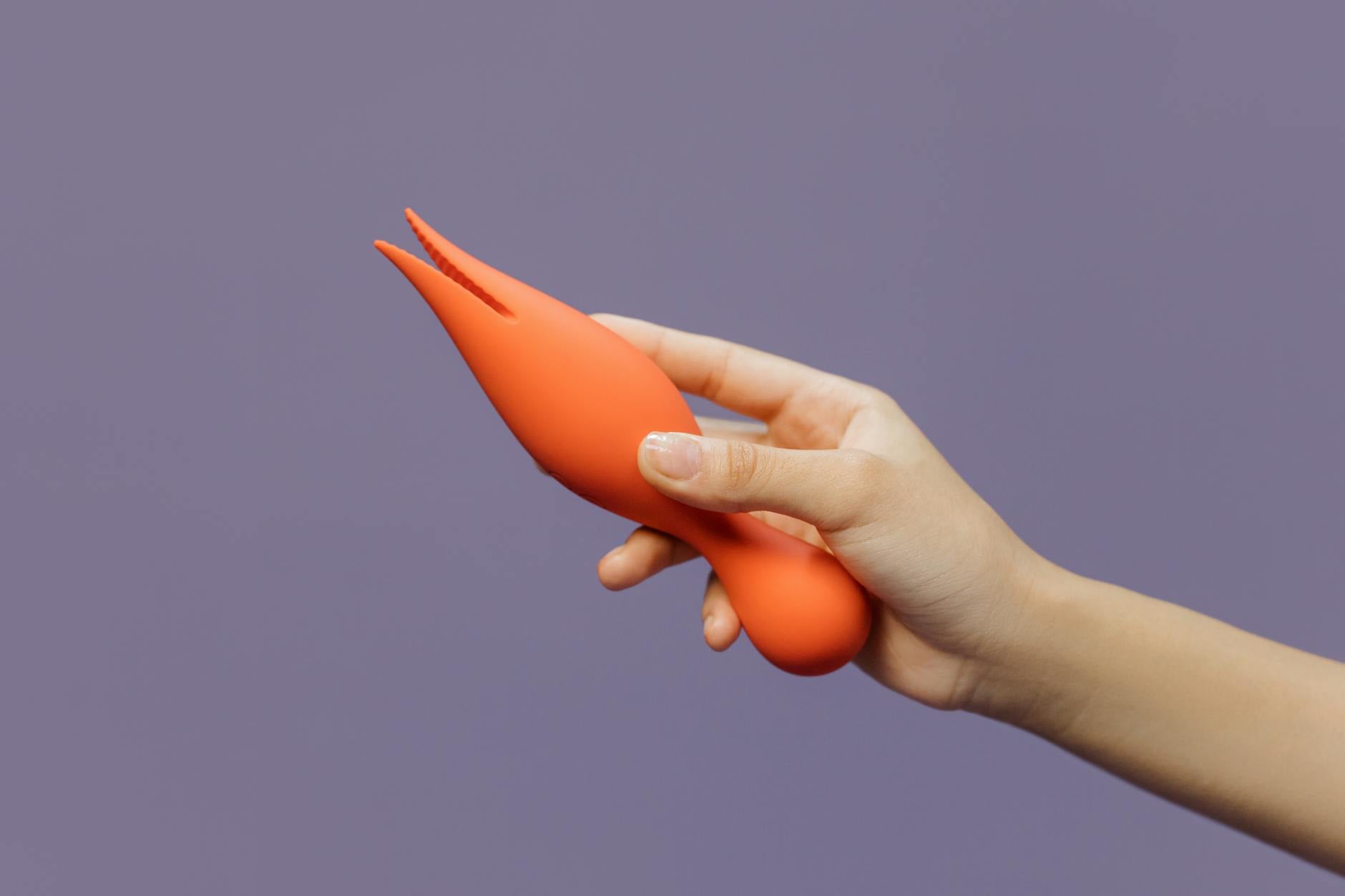
How to Use Lemon Vibrators When Your Clitoris Feels Less Sensitive With Age
Your clitoris doesn't stop working at 40, 50, or beyond. It changes. Here's the neurology behind it, why traditional vibrators often fail, and why suction works better as you age.
Let's be real. Your clitoris doesn't lose its wiring as you get older. What actually happens is more interesting, and way less permanent than most people think.
Your clitoral nerve density doesn't decline significantly with age. But the speed at which those nerves fire, and the kind of stimulation they respond to most reliably, absolutely does change. Add thinner skin, reduced blood flow to the area, and shifting hormones, and what used to work on setting 7 suddenly feels like background noise.
Here's the plot twist: this isn't a dead end. It's a recalibration. And once you understand what changed, you can actually rebuild sensation faster than you'd expect.
Most traditional vibrators rely on frequency to create sensation. They buzz at a set speed, usually 40 to 100 hertz per second, and expect your nerves to fire along with that rhythm.
When you're younger, your clitoral tissue is thicker and more vascularized. Those fast vibrations ping your nerve endings reliably, and orgasm builds predictably. Easy.
As you age, a few things shift. Your epidermis thins. Blood flow to the vulva decreases gradually. Estrogen changes affect tissue elasticity and how sensitive nerve endings actually are to that particular frequency of buzz. The same vibrator that worked beautifully at 35 can feel dull, irritating, or somehow disconnected by 50 or 55.
The instinct, usually, is to turn up the intensity. More power, faster speed. But that's often the wrong move. You're not chasing more intensity. You're chasing a different type of stimulation altogether.
Suction toys, including the Lemon Clitoral Vibrator, work on a completely different principle. Instead of relying on frequency alone, they create rhythmic pressure changes. They gently draw the clitoral tissue inward, creating a vacuum release pattern that feels like a combination of suction and subtle vibration.
Why does this matter for age-related sensitivity loss? Three reasons.
First, suction activates more nerve fibers at once. Your clitoris has thousands of nerve endings, and they respond to different types of stimulation. Vibration alone can miss whole clusters. Suction engages pressure receptors, stretch receptors, and mechanoreceptors all simultaneously. Your nervous system has more to work with.
Second, suction requires less tissue sensitivity to register. A vibrator depends on your nerves recognizing that specific frequency. Suction works through pressure change, which is a cruder signal and therefore easier for aging nerve endings to decode reliably. It's the difference between asking your ears to hear a specific pitch versus feeling a hand squeeze your shoulder.
Third, suction toys like those from The Lemon Suction Toys tend to have longer stimulus cycles. They're not operating at 50 hertz. They're creating a pulse that lasts 1 to 3 seconds per cycle, giving your nervous system more time to process each sensation.
Your clitoris is really an external-internal organ. The visible part—the glans—is only the tip. There's a whole internal structure: the clitoral bulbs, the clitoral crura (the two wishbone-shaped structures inside your vulva), and a network of tissue that extends deeper than most people realize.
As estrogen declines, all of that tissue loses some of its plumpness. The clitoral bulbs shrink slightly. The tissue doesn't swell as easily during arousal. This isn't because you've lost the capacity for pleasure. It's because your tissue architecture is literally smaller, which can make stimulation feel more diffuse instead of concentrated.
Suction addresses this directly. By creating gentle pressure and release, it's essentially waking up that whole internal network. It's coaxing the clitoral tissue to respond and swell, which is what makes stimulation feel more focused again.
This is partly why people who've experienced sensation loss from hormonal shifts or aging often report that suction toys work where traditional vibrators failed completely. You're not forcing your body back into its old response pattern. You're using physics to compensate for the architectural changes that age has already created.
Start with warm-up time. Blood flow is the foundation of sensation. At 25, arousal might happen in 5 minutes. At 50 or 60, it might take 15 or 20. That's not failure. That's normal. Spend 10 to 15 minutes on non-clitoral touch first—touch on your thighs, labia, breasts, inner arms. This isn't foreplay in the traditional sense. It's literally increasing blood flow to your vulva before you introduce any toy.
Use a water-based lubricant, always. Thinner tissue is more delicate. Friction without lubrication doesn't just feel dry. It can create micro-abrasions that make sensation duller, not sharper. A good water-based lube isn't a patch. It's a foundation. It protects your tissue and actually allows nerve endings to register stimulation more clearly.
Start low and build. The Lem and similar Lemon Vibrators usually have 5 to 10 intensity levels. Your instinct might be to jump to level 7 or 8 because lower settings feel faint. Don't. Start at level 1 or 2. Spend 2 to 3 minutes there. Your nervous system needs time to wake up. As you continue, you might find that level 3 or 4 becomes wildly more intense than it felt in the first 30 seconds. That's your body responding correctly. Patience creates better sensation than force.
If you're with a partner, the biggest shift that comes with age-related sensitivity loss is often psychological, not physical. You might feel self-conscious that things take longer. Your partner might misinterpret slower arousal as disinterest. Neither is true.
The solution isn't more talk about the problem. It's integration. A toy like The Lemon Clitoral Vibrator isn't a backup plan when your body doesn't work the old way. It's part of the new way you're building pleasure together.
When you're alone, experiment first. Learn what patterns feel good, what intensity levels work, how long warm-up you actually need. Then, when you involve a partner, you can say, "I want us to use this together," rather than, "My body isn't working anymore."
The second framing is about loss. The first is about upgrade.
Age-related clitoral sensitivity loss is normal. Pain during use is not. If you feel sharp pain, burning, or rawness, stop and see a gynecologist. Sometimes what feels like "sensitivity loss" is actually early signs of genitourinary syndrome of menopause or another treatable condition.
Similarly, if sensation loss happened suddenly rather than gradually, and it's paired with other symptoms (fatigue, mood changes, joint pain), talk to your doctor. Age-related changes usually happen slowly. Sudden shifts can indicate thyroid issues, medication side effects, or other things that are actually fixable.
But gradual sensitivity decline without pain? That's aging. That's normal. And that's completely manageable with the right approach.
One of the most common mistakes people make when sensation starts to fade is pushing harder. Faster toy, more intensity, longer sessions. That often backfires. It can actually tire out nerve endings instead of waking them up.
The real path is slower and more deliberate. Warm blood to the area. Use stimulation that engages multiple types of nerve fibers. Build arousal gradually. Use lubrication to reduce friction and protect tissue. Choose toys designed for how your body actually works now, not how it worked 20 years ago.
Your clitoris at 55 is not a broken version of your clitoris at 35. It's a different tool with different preferences. Once you stop fighting that and start respecting it, sensation often returns faster than you'd expect. You're not rebuilding something lost. You're learning a new way to access something that's still completely there.
There's no standard amount. Some people notice subtle shifts in their 40s. Others don't experience significant changes until their 60s or later. It's not one of those things where a switch flips at 50. It's a gradual process that happens differently for everyone. Hormonal changes, medication, blood flow, and individual nerve sensitivity all play a role. The key is that it's not permanent, and it's not a sign that your capacity for pleasure is gone.
Suction engages more types of nerve endings than frequency-based vibration alone. As clitoral tissue ages and becomes thinner, the pressure-and-release pattern of suction can feel more noticeable than a high-frequency buzz. Suction also encourages blood flow and tissue swelling in a way that traditional vibration doesn't, which can help restore sensation. Think of it as the difference between a tap on the shoulder and a gentle squeeze. The squeeze creates a clearer signal for aging nerve endings to process.
Completely normal. Orgasms might feel less intense, more localized, or take longer to build. Some people describe them as quieter but deeper. Others say they feel more whole-body. The architecture of your orgasm changes because the tissue is different, blood flow patterns shift, and hormones are different. But the capacity for orgasm doesn't disappear. It changes shape.
Yes and no. You can't turn the clock back on your tissue. But you can rebuild sensation through consistent, mindful practice with the right stimulation type. Many people find that after a few weeks of regular use with toys that actually work with their current physiology, sensation feels noticeably sharper. You're not reversing aging. You're retraining your nervous system to respond more reliably to the stimulation you're giving it.
Age-related changes happen gradually and affect sensation overall—things just feel duller. Numbness from conditions like neuropathy, medication side effects, or anxiety feels different. It's often localized, sudden, and paired with other symptoms. If your sensitivity loss happened suddenly or feels like complete numbness in one area, see a doctor. If it's a slow fade across the whole area over months or years, that's typically normal aging.
Most people notice shifts within 2 to 4 weeks of consistent use—maybe 3 to 4 times a week. But rebuilding sensation isn't linear. Some days will feel way better than others. Stress, sleep, hormones, and whether you actually have time to warm up properly all affect how responsive you are on any given day. Patience is the real tool here. The Lemon Clitoral Vibrator and similar suction toys create the conditions. Your consistent attention creates the result.
The thing is, your clitoris is not done with you. It's just demanding a smarter approach. Once you stop fighting what's changed and start working with it, you'll probably find that pleasure isn't fading. It's just asking you to pay closer attention. That's actually not a loss. That's an invitation to get to know yourself again.