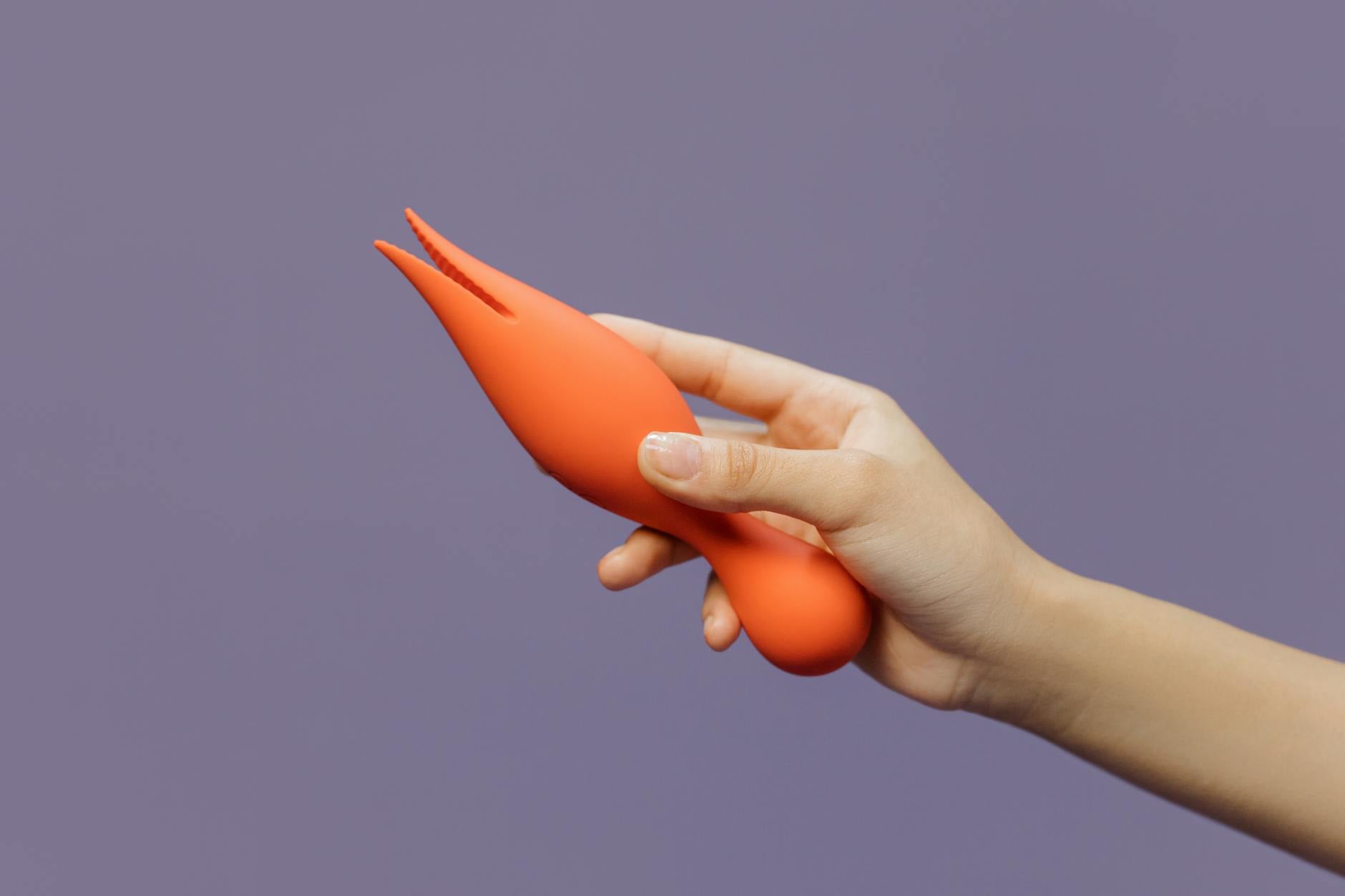
How to Use Lemon Vibrators When Your Partner Finishes Too Quickly
Premature ejaculation doesn't have to mean the end of pleasure for you. Here's how a lemon clitoral vibrator shifts the whole dynamic and keeps you both satisfied.
When your partner comes before you're even close to done, it's easy to feel like something's broken. It's not. What's actually broken is the assumption that his orgasm marks the end of sex. It doesn't have to.
Premature ejaculation is wildly common. We're talking 20-30% of men dealing with this at some point. It's usually not psychological drama. It's physiology. Some people's nervous systems are just wired to climax faster, especially under the pressure of performance anxiety. And here's the trap: the more he worries about finishing too early, the faster it happens. The anxiety itself becomes the accelerant.
So blaming him, or pretending it's fine when it isn't, just feeds the cycle. He gets tense. You get frustrated. Next time he's even more in his head. And suddenly sex becomes something you're both avoiding.
What actually works is separating two conversations that usually get tangled together: his orgasm and yours.
A clitoral vibrator like the Lem gives you orgasms on your timeline, not his. That's the whole game changer.
Here's what changes: once he finishes, instead of sex ending, it shifts. He can touch you, enter you again without pressure, use his hands, use his mouth. And you have the Lem working for you. No countdown. No "I have three minutes before this gets awkward." You get to chase your own pleasure without his body setting the pace.
This does two things at once. It means you're more likely to orgasm, which honestly makes you happier and keeps the dynamic positive. And it means he's not lying there feeling like a failure. He's actively part of your pleasure. His nervous system relaxes because the pressure's off.
Don't just pull out a lemon vibrator mid-sex and hope he gets it. That can feel like you're telling him he's not enough, even if you don't mean it that way.
Instead, have this conversation when you're clothed and calm. Something like: "I want us both to finish satisfied. I've been thinking about using a vibrator during sex, and I'd love to try it together. Not instead of you. With you." That's it. Keep it simple.
If he's hesitant, listen. Some guys worry it means he's being replaced. Reassure him: you're asking him to be part of your orgasm, not to step aside. You need him inside you, touching you, watching you come. The vibrator is a tool you're adding, not a substitute.
Most partners find they actually like this. There's something really sexy about being the one who gets to watch, participate, and know his partner is finally getting what she needs.
Start simple. Once he's inside you, bring the Lem in. Press it against your clitoris while he's moving. You control the pressure and rhythm. He controls the depth and pace. It's collaborative in a way that solo vibrator use isn't.
If he finishes early, he doesn't have to stop. He can stay inside you, keep moving gently, and keep his hand on yours as you finish. Or if that doesn't work for him, he can be inside you from behind while you use the vibrator on your own. The point is he's still there, still connected, not watching from across the room.
For some couples, the vibrator is only used after he comes, extending sex rather than starting alongside it. Try both ways. There's no script.
Timing issues in bed often point to something deeper: communication breakdown. You're both avoiding the conversation about sex because it feels too tender or embarrassing. Or one of you is prioritizing the other's comfort over saying what you actually need.
This is why the vibrator works. It forces the conversation. It makes pleasure a team project instead of a performance test. Once you're both working toward the same goal, a lot of resentment just evaporates.
I've worked with couples where this single shift changed their entire dynamic. Not just in bed. Suddenly he's not avoiding intimacy because he's ashamed. She's not resentful because her needs aren't being met. Sex becomes something you're both excited about instead of something you're managing.
Sometimes premature ejaculation isn't just physiology. It's pure anxiety. If your partner is catastrophizing, losing erections, or completely avoiding sex, that's worth talking to someone about. Cognitive behavioural therapy works really well for this. So do techniques like the start-stop method, where he learns to recognize the sensation before he climaxes and pause to reset.
But here's the thing: the vibrator doesn't replace that work. It complements it. While he's working with a therapist or practicing control techniques, the vibrator ensures you're still having good sex. You're not putting your pleasure on pause while he figures it out.
If timing is the only issue and everything else feels connected, this is usually straightforward to fix. But if you're using the vibrator to avoid deeper problems, it won't solve them. If you're resentful, if you don't actually like each other that much, if there's infidelity or broken trust, that needs its own work.
The vibrator is a tool for couples who want to be together. It's not a band-aid for relationships that are fundamentally struggling.
If this conversation feels impossible to have, if there's shame or blame flying around, consider seeing a couples therapist. Not because something's wrong with you. Because sex is often where relationship issues show up first. A good therapist can help you talk about pleasure without it feeling like criticism.
And if he wants to work on stamina, he doesn't have to do it alone. You can be part of the solution, not the problem he's trying to fix.
It might, at first. That's why the conversation matters. Frame it as something that helps you both. The goal is mutual pleasure, not replacement. Most partners actually feel relieved once they realize sex doesn't have to end when they do, and that taking pressure off improves everything.
Absolutely. You can use it while he's practising control techniques. That way you're both working toward something, and you're not going without while he learns.
Start on a lower setting. The Lem has multiple patterns, so you can dial it down. You can also use it just on your external clitoris, not inside. And you can take breaks. There's no rule that says it has to be constant contact.
No. This means you're both mature enough to solve a problem instead of pretending it doesn't exist. Most couples who incorporate toys report higher satisfaction and more regular sex. It's not a sign of dysfunction. It's a sign you're willing to adapt.
Respect that. But also ask him why. Is it insecurity? Cultural shame? Genuine preference? Because some of that might be worth exploring together. And there are other solutions: positions that delay his orgasm, different techniques, focusing on foreplay. But if you're not having satisfying sex and he won't engage with any solution, that's a conversation about willingness, not mechanics.
Premature ejaculation doesn't mean the end of your sex life. It means the beginning of a more honest one. Once you stop pretending timing isn't an issue and start actually talking about pleasure, things shift. A lemon clitoral vibrator like the Lem makes that easier because it's concrete. It's a tool. It's not blame. It's not criticism. It's just a different way to touch each other and finish satisfied.
If you're ready to have that conversation, start with the simple version. "I want us both to come. Let's figure this out together." Most partners are relieved someone said it out loud.