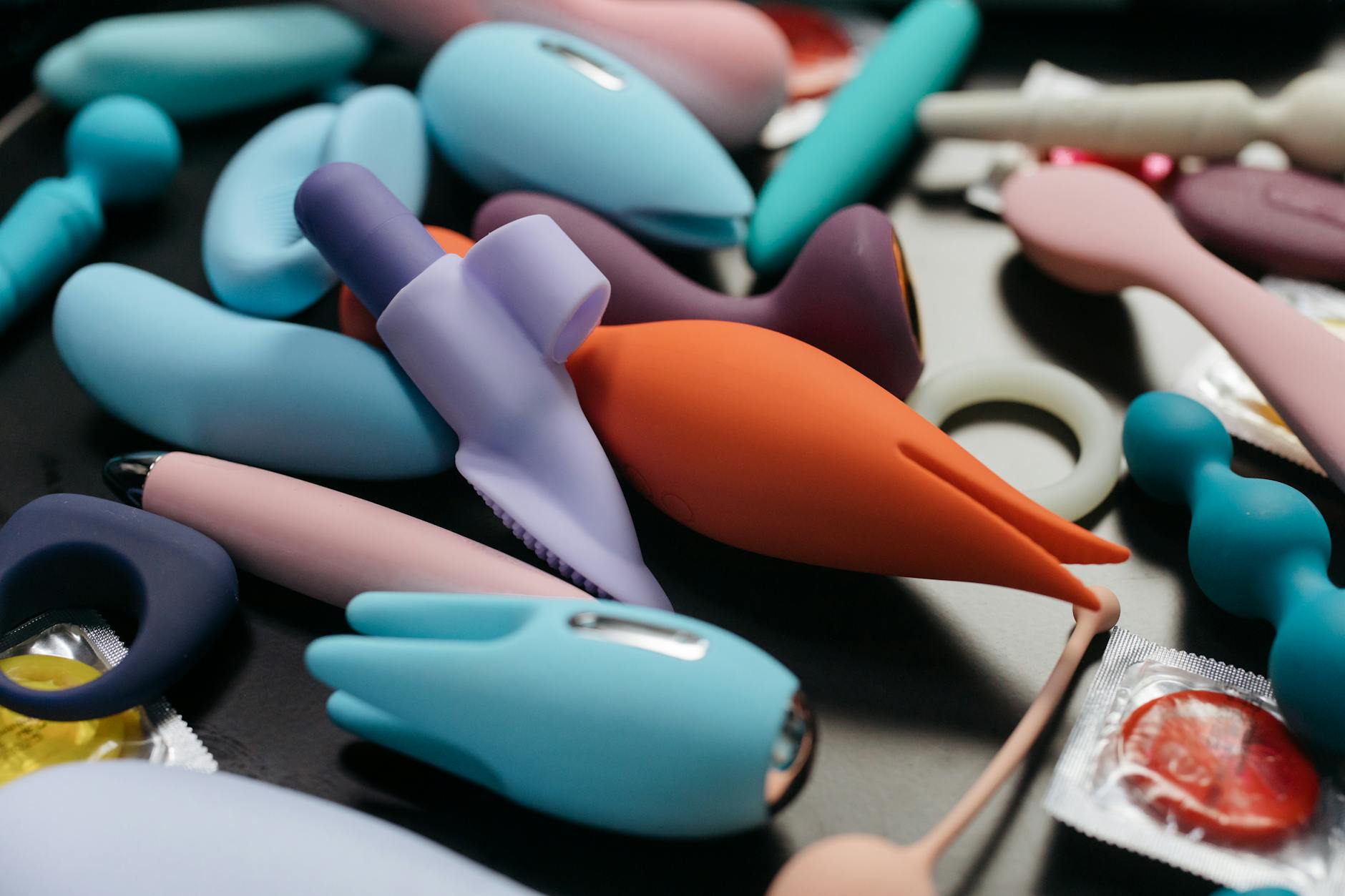
How to Use Lemon Vibrators With Birth Control and Hormonal Changes
Birth control rewires your body's response to pleasure. Here's what actually changes, why it matters, and how lemon clitoral vibrators work differently across your cycle.
Birth control changes how your body responds to stimulation. It doesn't kill pleasure. It changes the mechanics, the timeline, and sometimes the intensity. Most people figure this out by accident, after months of wondering why their usual routine feels different.
I'm going to walk you through exactly what happens when you start, switch, or come off hormonal birth control, and how to use tools like lemon vibrators to work with your body instead of against it.
Birth control (the pill, the patch, the ring, the shot) suppresses the natural estrogen and progesterone fluctuations that shape your cycle. Instead, you get steady, synthetic hormone levels.
Here's what that does to pleasure:
Arousal takes longer. Natural cycles spike estrogen mid-cycle, which floods your genitals with sensation and blood flow. Synthetic hormones don't create that peak. Your body still responds, but the build-up is gentler and slower.
Lubrication changes. Hormone-responsive tissues produce less natural lubrication on many hormonal birth control methods. Water-based lube becomes a permanent fixture, not an occasional helper.
Sensation spreads. Instead of feeling pleasure concentrated in your clitoris during high-estrogen phases, it often distributes across the vulva more evenly. This sounds subtle. It changes everything about how external stimulation feels.
Desire sits differently. You might notice desire isn't cyclical anymore. That's not you losing interest. That's your brain and body running on a different hormone schedule.
The good news: these changes are predictable. You can plan around them.
Not all hormonal birth control affects pleasure equally. The dose and hormone type matter.
High-dose pills (older formulations) dull sensation more noticeably than low-dose versions. If you're on something from the 1990s, ask your GP about switching to a modern low-dose option.
Progestin-only methods (the mini-pill, the shot, the implant) often affect libido and sensation more than combined pills because they use a different hormone ratio. People on progestin-only methods frequently report lower desire and muted sensation.
The ring and patch deliver hormones more steadily than pills, which means fewer fluctuations and often more consistent (if lower) sensation.
Non-hormonal options (copper IUD, fertility awareness, condoms) don't change your natural cycle at all. If hormonal birth control has flattened your pleasure, switching to non-hormonal might restore some of what you've missed.
This isn't a reason to abandon birth control. It's information to help you choose the method that balances protection and pleasure.
Lemon vibrators, like the Lem clitoral vibrator, use suction and pulse rather than direct vibration. This matters when you're on birth control.
Direct vibration requires strong sensation to register. When hormones dull that sensation, you end up chasing intensity, turning up the speed, and using more pressure than feels good.
Suction-based stimulation works differently. It creates a sealed opening and pulse pattern that activates nerves without requiring high sensation sensitivity. You feel it deeply even when surface sensation is muted.
In practical terms: when you're on hormonal birth control and sensation feels flat, switching from a traditional vibrator to a lemon clitoral vibrator often restores the pleasure you remember.
If you're on a pill with a hormone-free week, that week matters even though you're not technically having a natural cycle. During the hormone-free days, your body briefly drops synthetic hormone levels. Sensation often spikes. That's your window of easier arousal.
If you notice pleasure feels easier on days 4-7 of your pill pack, that's not random. That's biology. You can plan around it.
For non-cyclical methods like the shot or implant, sensation tends to stay flatter throughout. That's actually helpful for consistency, even if the overall baseline feels lower.
Track it for one month. Note when sensation feels easiest, when arousal builds fastest, when you need more lube. That map becomes your guide.
Four things I recommend to people navigating birth control and pleasure:
Warm-up time. Budget 15-20 minutes instead of 5-10. Synthetic hormones slow the arousal cascade. You're not broken. You need more runway.
Lube as standard. Treat it like toothpaste. Always there. This isn't shame. It's chemistry. Synthetic hormones reduce natural lubrication in many people. Water-based lube (silicone degrades silicone toys) makes everything better.
Lower starting intensity. Begin on pattern 1 or 2 with your lemon vibrator, not pattern 4. Hormonal birth control often makes higher intensities feel overwhelming. Start gentle and let your body signal when you're ready to increase.
Mental space above all else. Pleasure on birth control is often more mental than physical. Distraction kills it faster. That doesn't mean you're doing something wrong. It means finding 15 minutes of genuine mental quiet matters more than it did pre-birth control.
If pleasure has completely flattened and lube and lemon vibrators aren't helping, birth control might be the culprit. Some people's bodies simply don't work well on certain hormones.
You have options. Switching to a different pill formulation, lowering the dose, or trying a non-hormonal method can restore sensation in weeks. Your GP can help you find a method that protects you and lets you feel good.
If you're experiencing pain during stimulation (not low sensation, but actual discomfort), mention that too. Some birth control methods can thin vaginal tissue, which shows up as discomfort, not pleasure loss.
If you're using birth control with a partner, separating conversations matters. "My body is responding differently" isn't the same conversation as "I want us to slow down and reconnect." Many couples accidentally conflate them and end up frustrated.
Tell your partner: my hormones have changed how I respond. I need more time to warm up. I might need more lube. I'm not less interested. I'm responding differently.
Then: do you want to explore this together, or do you want space to figure it out solo first?
There's no right answer. There's only honesty and patience.
Some people report that hormonal birth control actually makes pleasure more accessible. No monthly hormonal chaos means more consistent ability to focus. Steady hormones mean predictable sensation instead of erratic cycling.
If you're one of those people, that's valid too. Birth control is individual. Your experience doesn't need to match anyone else's.
The pill lowers estrogen compared to your natural cycle. Estrogen drives blood flow to genital tissues and sharpens sensation. Synthetic hormones don't create the same peak, so your baseline sensitivity sits lower. This is normal, not permanent, and absolutely manageable with the right tools and patience.
Yes, many people do this (it's called extended cycle or continuous pill use). Talk to your doctor first, but skipping the hormone-free week keeps your levels steadier and sometimes feels better for pleasure. Some people report more consistent arousal. It's worth trying if sensation-flatness bothers you.
Not a different type, but consistent use matters more. Water-based lube works fine. Avoid silicone lubes if you're using silicone toys like the Lem clitoral vibrator, as silicone lube can degrade the toy. Stick with water-based and reapply often.
Three to six months for your body to settle into new hormones and for you to really understand how sensation has shifted. Give yourself at least this much time before deciding a method doesn't work for you. Your pleasure baseline changes gradually.
No. Your body needs 2-3 months to rebalance hormones after stopping. During this time, expect erratic sensation as your natural cycle returns. This is temporary. Your baseline usually returns to pre-birth control normal within three months.
Sometimes. Sensation and desire are linked but not identical. If lube, warm-up time, and slower starts don't help, the issue might be hormonal desire (your brain's drive to have sex) rather than sensation. Talk to your doctor about trying a different birth control method. The right one can restore both sensation and desire.
Birth control is a choice that protects you. Your pleasure matters too. Understanding how your specific method changes sensation lets you take control back. Lemon vibrators, lube, patience, and honesty with yourself and your partner can make pleasure work beautifully alongside birth control.
If you're struggling to find a method that balances protection and pleasure, reach out. There's likely a better fit than what you're using.
Contact us if you want to talk through options or need personalized advice.