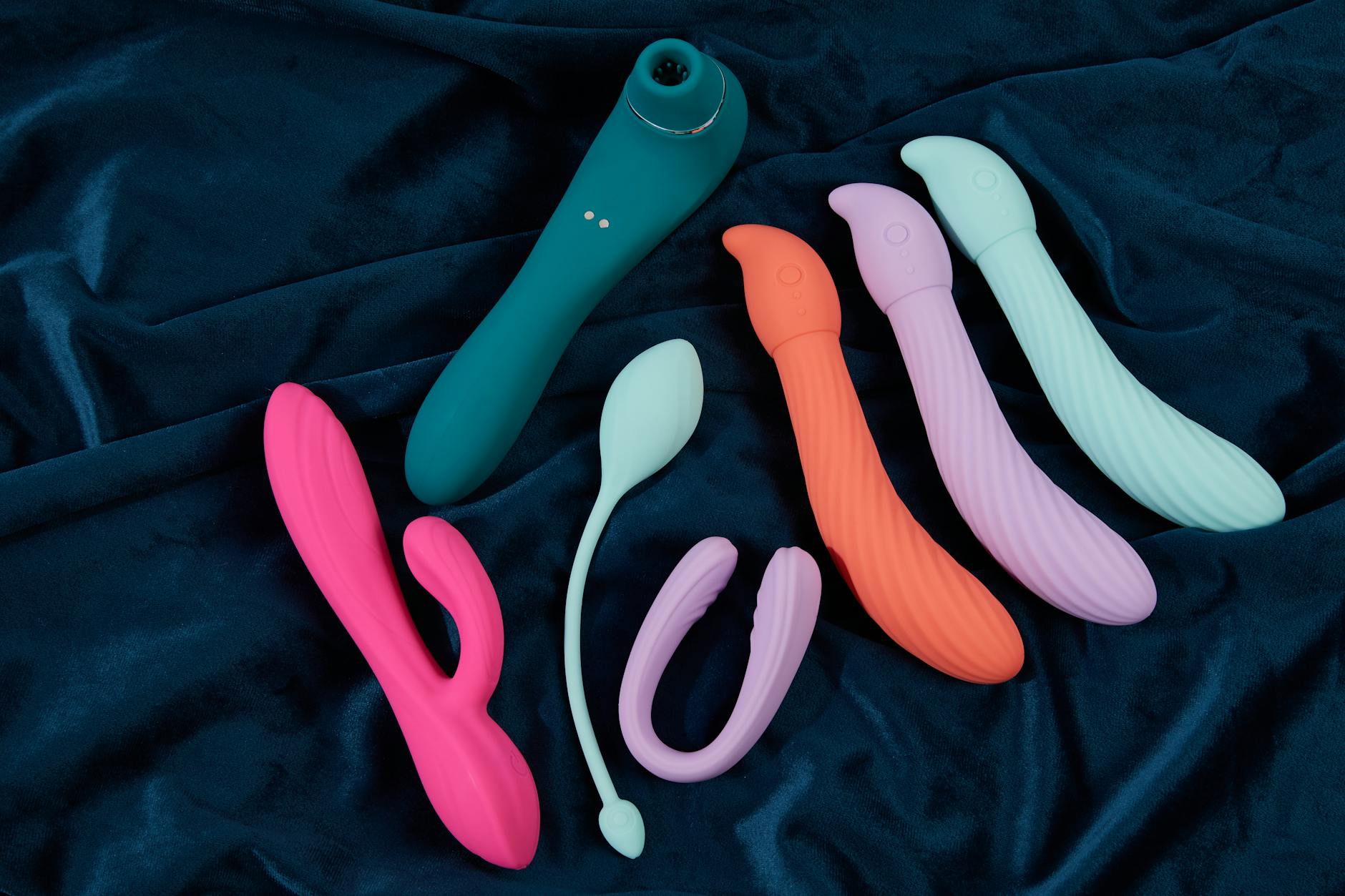
Your clitoral sensitivity doesn't stay the same. Between your 20s and 30s, something shifts. And I'm not talking about getting "less" sensitive or "more" sensitive in a linear way. It's more like your body rewires how it processes sensation, what kind of stimulation actually lands, and how lemon vibrators hit differently than they used to.
The tricky part? Most people don't notice until they're frustrated that their favorite technique stopped working, or their vibrator feels weirdly intense when it never used to be. Understanding what's happening physiologically takes the mystery out of it.
Here's the science part, made plain. Your clitoris contains about 8,000 nerve endings. Their responsiveness depends on blood flow, hormonal fluctuations, and something called "sensory threshold adaptation." That last term means your nervous system gets slightly less reactive to the same stimulus over time if it's applied repeatedly in the same way.
In your 20s, this threshold is typically lower. You need less stimulation intensity to reach arousal and orgasm. Your blood flow to the clitoris is robust. Hormonal stability (if you're cycling) creates a predictable rhythm of sensitivity peaks and valleys across your cycle.
In your 30s, a few things change. Blood flow to the genitals is slightly less immediate. If you've spent a decade using the same type of vibrator or technique, your nervous system has genuinely adapted to it. That's not dysfunction. It's adaptation. Your body got efficient at processing a signal, which paradoxically can mean you need variation to feel the same intensity.
Hormonal changes also creep in. Even if your period is regular, progesterone levels shift slightly with age, which affects tissue elasticity and nerve sensitivity. This isn't menopause. It's just the biological march.
You've probably noticed this: the pattern or intensity level that worked beautifully at 22 feels... less or different at 32. This isn't you being broken. It's sensory habituation, and it's totally normal.
The fix is almost always variation, not more power. When you use a clitoral vibrator like a Lem in the exact same way for years, your nervous system learns to filter that signal. You literally need novelty for the sensation to feel fresh. This is why technique matters more in your 30s than it did in your 20s.
Think of it like listening to the same song on repeat. The first hundred times, it hits. By the thousandth, you barely notice it unless something changes about how it's delivered. Same vibrator, different angle. Same pattern, different duration or build-up. That novelty resets your sensory threshold temporarily.
In your 20s, menstrual cycles are often more regular, which means you can predict when you're in a high-sensitivity window (usually just before and after ovulation). You might have had patterns you could almost schedule around.
In your 30s, while cycles are often still regular, the amplitude of the sensitivity peaks and valleys flattens slightly. You might not have the dramatic 10-day window where your clitoris feels hypersensitive anymore. Instead, sensitivity is more consistently moderate, with smaller fluctuations.
For lemon vibrator use, this means the spotting approach that worked before might feel less dramatic now. The solution is longer sessions with more varied patterns rather than expecting one intense window to carry you through. You're not losing sensitivity overall. You're gaining a different sensitivity profile.
Arterial function gets marginally less efficient in your 30s. Blood flow to the genitals is still robust, but it takes slightly longer to fully engorge the clitoral tissue. This is why warm-up time becomes genuinely important in a way it might not have been before.
In your 20s, you could jump straight to a Lem vibrator and it would feel amazing. In your 30s, 5-10 minutes of build-up before using the vibrator makes an enormous difference in how satisfying it feels. You're not lacking arousal capacity. Your system just needs a gentler on-ramp.
This is also why external stimulation with a clitoral vibrator becomes so much more important in your 30s. When you're warming up gradually, the focused, consistent pressure of something like a lemon sucker allows you to reach that swollen, ready state more efficiently than less direct touch would.
A counterintuitive shift: many people report that the highest intensity settings on their vibrator feel overwhelming or uncomfortable in their 30s, even if they loved them in their 20s. This isn't losing sensation. This is the nerve density staying the same while tissue thickness and hormonal support change slightly.
Higher intensities can now feel too much, too fast. Switching to mid-range patterns and focusing on duration instead of power often works better. If you had a Lem vibrator that you used on level 5 in your 20s, you might find that levels 2-4 with longer application time feel better now.
The silver lining? This often makes orgasms feel more complex and layered. Lower intensity allows finer-grained nerve feedback, which can actually lead to more interesting sensations and sometimes stronger orgasms overall, just built differently.
This matters more than most people admit. In your 20s, orgasm might have felt like a pure physical reflex. Less thinking required. In your 30s, your brain has more information, more self-awareness, sometimes more stress. A busy mind genuinely affects how your clitoral nerves feel sensation.
You might notice that the same vibrator feels different depending on whether you're stressed, tired, or distracted. This isn't your body changing. This is your nervous system operating differently when it's in a different state. The fix is permission: acknowledging that your arousal system now requires mental space to function fully.
This is also why <a href="/blog/why-lemon-vibrators-feel-different-for-sensitive-bodies">understanding how your sensitivity profile shifts</a> matters more than chasing the intensity you used to love. You're not chasing a fix. You're adapting to who you are now.
Vary your patterns weekly. If your Lem vibrator has multiple settings, rotate through them. Don't default to the same one every time. This resets sensory habituation and keeps sensation feeling novel.
Extend warm-up time intentionally. Plan 10-15 minutes of non-vibrator touch before using a clitoral vibrator. Your bloodflow system will appreciate it, and so will your nervous system.
Experiment with position and angle. The same vibrator applied at a slightly different angle to the clitoris can feel entirely different. Small variations create enormous perceptual shifts.
You're not losing anything. You're gaining nuance.
If sensitivity changes feel sudden or come with pain, that's different from the gradual recalibration that happens across the 20s to 30s transition. Sudden pain during vibrator use isn't normal and isn't something to adapt to. That's worth a conversation with a pelvic health specialist or gynecologist.
Similarly, if sensation is completely disappearing rather than just shifting, that can sometimes signal things like nerve compression or hormonal changes that deserve attention. For most people, though, the shifts you notice in your 30s are just the body evolving.
Many people find that their 30s are when pleasure deepens. You know your body better. You're less self-conscious. You're more willing to experiment. And lemon clitoral vibrators, with their focus on external precision and sustained sensation, often feel better in your 30s because you've learned how to use them in a way that matches how your current body works.
This isn't a decline. It's an upgrade disguised as a change.
Does clitoral sensitivity permanently decrease after 30? No. Sensitivity shifts, it doesn't disappear. Your nerves don't die. Your responsiveness to vibrators changes based on how you use them, your stress level, hormonal status, and blood flow. Most of these are adjustable.
Why does my clitoral vibrator feel numb sometimes but not other times? Sensory adaptation, stress, and hormonal fluctuation all affect how "present" sensation feels. If it happens sporadically, it's usually not pathological. If numbness is persistent, it's worth mentioning to a doctor.
Should I buy a more powerful vibrator if my 20s-era vibrator isn't hitting the same? Not necessarily. More power often feels worse, not better. Varying patterns, changing technique, and using a wider range of the settings you already have usually works better than upgrading to something more intense.
How do I know if my sensitivity changes are normal aging or something else? Normal aging is gradual, doesn't hurt, and responds to technique adjustments. Sudden changes, pain, numbness that doesn't shift with stress or hormones, or loss of sensation across your entire vulva should be discussed with a pelvic health provider.
Is it normal for orgasms to feel different in my 30s? Completely normal. Orgasm builds differently, peaks differently, and feels different as your nervous system matures. Some people find 30s orgasms are more intense, not less. The shape just changes.
Can I retrain my clitoris to be more sensitive like it was in my 20s? You don't need to retrain it back. You need to work with how it functions now. Varying stimulation, longer warm-up, and focused attention on what actually feels good right now (not what felt good 10 years ago) is the path forward.
Your sensitivity in your 30s isn't a problem to solve. It's information to work with. The Lem vibrator you loved in your 20s can absolutely still work beautifully now. You're just using it differently. And honestly, most people find that difference leads to something richer, not diminished.
If you're noticing shifts and want to explore how to work with your body as it is now, <a href="/contact">reach out</a>. That's what I'm here for.